
 简体中文
简体中文 Русский
 Français
 Português
 Español
 لالعربية
.jpg "Maintenance planning for electric counterbalance forklifts in high-usage facilities(figure1)")
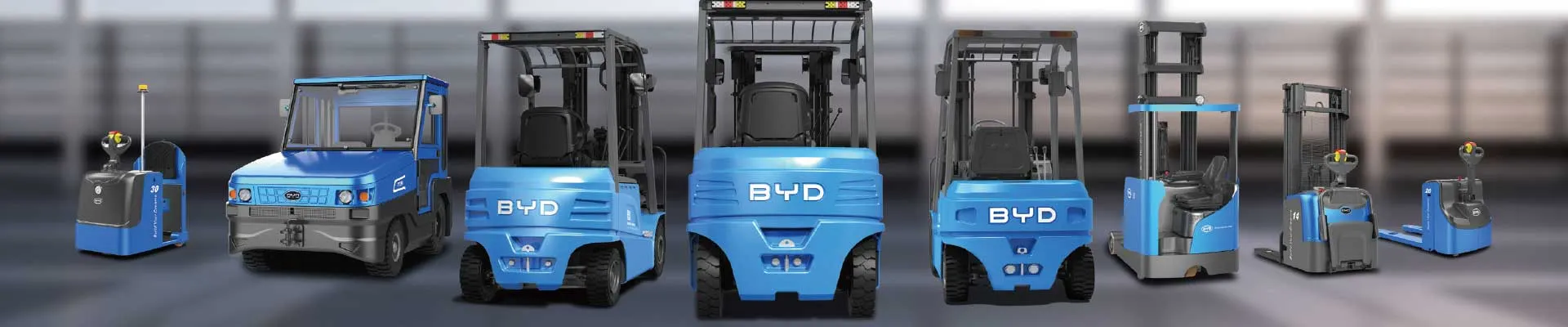
As low-carbon logistics becomes a mainstream trend across industrial sectors, electric forklifts have gradually become a core piece of material handling equipment for most warehousing, manufacturing and distribution scenarios. Unlike fuel-powered counterparts, electric models operate with lower noise levels and no on-site exhaust emissions, which fit the requirements of enclosed working spaces and strict environmental regulation areas.
Core Advantages of Electric Forklifts in Modern Material Handling
Electric forklifts rely on stored battery power to drive the lifting and traveling systems, and the overall operation vibration is kept at a relatively low level during daily use. For long-term operation in closed warehouses, the no-emission feature reduces the cost of air ventilation system operation, and the low-noise design creates a more comfortable working environment for on-site staff. Most current models support adjustable operation sensitivity, which can adapt to different load handling demands from light small parcels to heavy industrial goods within the rated load range.
Standard Daily Operation Guidelines
Before starting each shift of operation, operators need to conduct a quick inspection on the remaining battery level, the flexibility of lifting components, and the sensitivity of braking systems to eliminate hidden safety risks in advance. During the handling process, the load weight should not exceed the rated load parameter specified in the equipment manual, and operators should keep a stable driving speed when turning or passing narrow aisles. It is not recommended to carry out over-high lifting of goods during long-distance traveling, which can reduce the risk of side tilting of the equipment.
Practical Routine Maintenance Rules
Regular cleaning of the dust and sundries accumulated on the surface of the battery and body components can avoid extra energy consumption caused by poor heat dissipation. Users need to arrange professional personnel to conduct regular check on the wear condition of tires and transmission parts, and replace worn accessories in time to keep the equipment in good working condition. For the battery pack, follow the official charging procedures to avoid excessive discharge or long-term overcharging, which can extend the whole service life of the power system.
Efficiency Optimization in Different Application Scenarios
For high-frequency operation scenarios with more than 8 hours of daily working time, users can configure a spare battery pack to realize uninterrupted shift switching, which effectively reduces the waiting time for charging. For narrow aisle scenarios, adjust the steering sensitivity parameter of the equipment to fit the aisle width, which can improve the passing efficiency without extra transformation of the warehouse space.


