
 简体中文
简体中文 Русский
 Français
 Português
 Español
 لالعربية
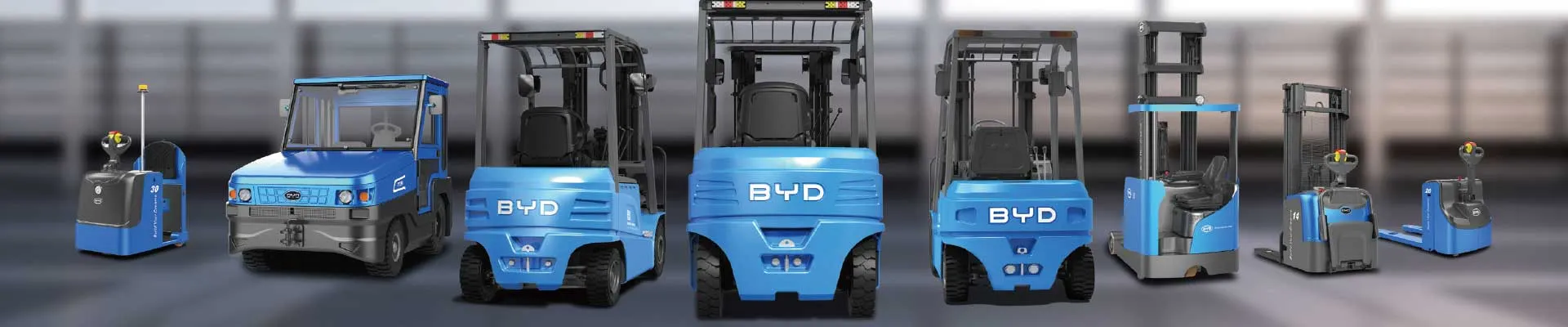
.jpg "How lithium-ion handling equipment fits operating rhythms at express-logistics industrial parks(figure1)")
Express-logistics industrial parks feature unique, rhythm-driven operation modes that run across extended daily hours, with distinct peak and off-peak cycles distributed across 24 hours. Typical daily workflows cover large batch parcel unloading from incoming fleets, cross-zone material transfer in sorting zones, and high-density loading for outgoing couriers, all of which put forward high requirements on the continuity and flexibility of handling equipment.
In the past, many fleets relied on fuel-based or lead-acid powered handling devices, which often break the smooth operation rhythm due to long full charging cycles, mandatory routine maintenance procedures, and noticeable power output decay when the battery level drops to a certain threshold. Such unplanned pauses often cause bottlenecks at key transfer nodes during peak hours, and add extra scheduling burden for operation management teams.
Lithium-ion handling equipment can fit this type of operation rhythm well from multiple dimensions. First of all, it supports opportunity charging that takes only 15 to 30 minutes during scattered off-peak breaks, such as the short interval between two batches of incoming parcels, or the team shift handover window. Operators do not need to arrange long dedicated charging time that takes up hours of working time, which can fill the gaps between different operation peaks without disrupting existing workflow arrangements. Second, lithium-ion handling equipment has much lower daily maintenance demands than traditional counterparts. Operators do not need to perform regular fluid refilling, long time static balancing or other time-consuming maintenance steps, which cuts down extra planned downtime, and can keep supporting multi-shift continuous operation for days without unnecessary pauses. Third, the power output of well-calibrated lithium-ion handling equipment stays relatively stable across the whole battery level range. No obvious speed or traction decay will occur when the device runs at 20% remaining power, so it can keep consistent working efficiency during both the first-hour morning unloading peak and the late-night outbound loading rush, avoiding unexpected slowdown at critical operation nodes. Fourth, the zero-emission and low-noise feature of lithium-ion handling equipment fits the closed indoor operation environment of most express parks well, and will not cause extra air pollution or disturbing noise during late night shifts, complying with the park’s daily operation management rules without adding extra environmental control costs. For the peak demand surge during industry promotion seasons, lithium-ion handling equipment can also be flexibly deployed to different operation zones without complex pre-configuration, adapting to the temporarily adjusted operation rhythm for high parcel volumes. With proper operation training and reasonable charging arrangement, lithium-ion handling equipment can seamlessly integrate into the existing operation flow of express-logistics industrial parks, reduce unplanned pauses, and support smoother, more stable daily operation.


