
 简体中文
简体中文 Русский
 Français
 Português
 Español
 لالعربية
.jpg "How-BYD-LiFePO4-forklift-batteries-behave-under-partial-charge-cycle-daily-warehouse-operating-patterns(figure1)")
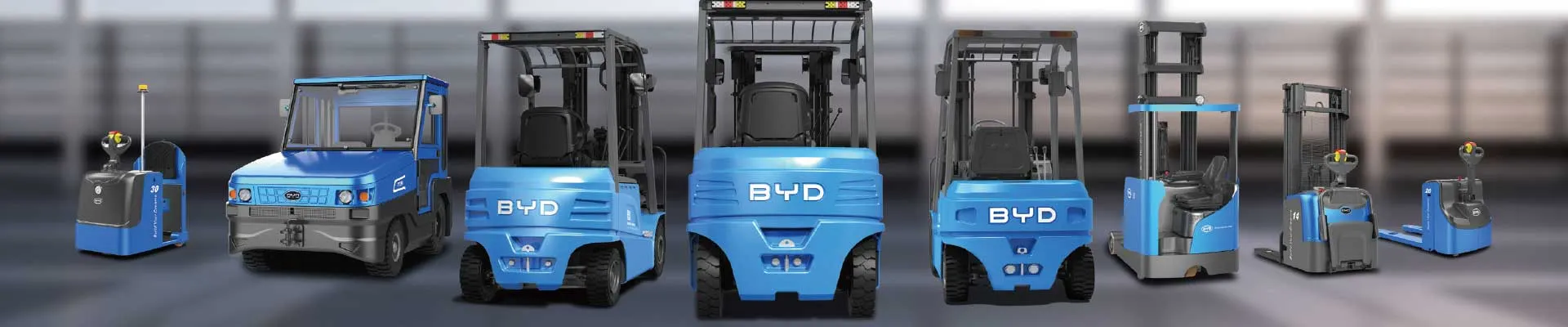
As the global logistics sector accelerates its low-carbon transformation, electric forklifts have become one of the most widely adopted material handling equipment in various industrial scenarios in recent years. This guide covers core practical knowledge for both new and experienced operators, to help maximize the value of the equipment in daily work.
Core Application Advantages of Electric Forklifts
Unlike traditional internal combustion handling equipment, electric forklifts operate with considerably lower noise and produce no local exhaust emissions, which fits the operation requirements of enclosed warehouses, food processing workshops, and pharmaceutical storage areas that have strict standards for air quality. The power output of electric units is smoother, which reduces the risk of cargo shaking and falling during lifting and transporting, effectively lowering the damage rate of fragile or high-value goods in the handling process. It also avoids the fuel supply link in daily work, which reduces the related safety risks brought by flammable fuel storage in the working area.
Standard Operation Guidelines for Daily Scenarios
Before each shift starts, operators need to complete basic pre-operation checks, including confirming remaining battery capacity, testing the sensitivity of the braking system, and checking the wear condition of the lifting chain and pallet forks. During the operation process, personnel should avoid overloading beyond the rated load limit, slow down when turning at corners, and keep a sufficient safe distance from shelf edges and surrounding personnel in narrow aisles. It is not recommended to drive the equipment at high speed on wet or uneven ground to avoid sideslip risk. Operators should also adjust the operation speed according to the actual density of personnel and cargo in the working area at any time.
Rational Maintenance Norms to Extend Service Life
For the energy storage system, operators should avoid frequent full discharge to 0% state, and arrange charging in well-ventilated, cool environments to avoid overheating during the charging process. Operators can regularly wipe the surface of the electric control components with dry soft cloth, instead of washing the whole vehicle with high-pressure water directly to prevent short circuit of internal circuits. Applying lubricating oil to the movable connection parts of the lifting mechanism every fixed work cycle can reduce friction loss, and effectively cut down the frequency of unplanned downtime. Following the above operation and maintenance rules can help enterprises obtain more stable equipment performance, and create a safer, more efficient material handling working environment.


