
 简体中文
简体中文 Русский
 Français
 Português
 Español
 لالعربية
.jpg "BYD-LiFePO4-forklift-storage-recommendations-for-long-period-idle-non-operating-facility-conditions(figure1)")
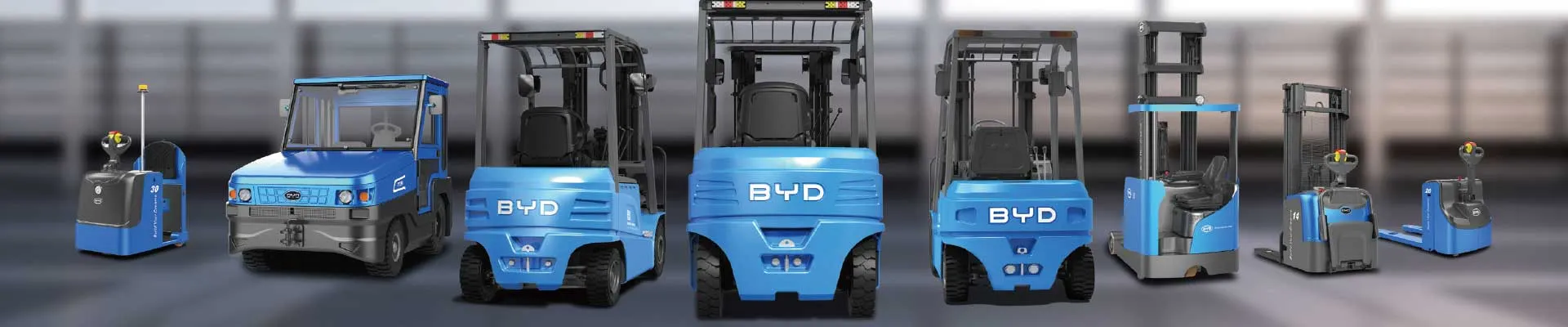
Against the background of growing demand for low-carbon and high-efficiency logistics operations, electric forklifts have become one of the most widely used material handling equipment in modern warehouses, manufacturing workshops and distribution centers. Mastering systematic professional knowledge of electric forklifts helps relevant practitioners reduce operation risks, cut long-term operation costs and improve overall logistics turnover efficiency.
Core Functional Advantages of Electric Forklifts
Compared with traditional internal combustion handling equipment, modern electric forklifts produce no exhaust emission at the operation site, which makes them fully applicable to enclosed storage spaces, food processing workshops and other scenarios with strict requirements for air cleanliness. Their operation noise is controlled at a relatively low level, which reduces noise pollution in the working area and eases the fatigue of on-site operators during long shifts. The running vibration of electric forklifts is relatively gentle, which effectively reduces the risk of collision and damage to fragile or high-value goods during the handling process.
Standard Daily Operation Specifications
All operators need to complete formal skill training before they get permission to operate the equipment. Before each startup, operators need to check the braking system, power display, hydraulic lifting components and safety warning devices to confirm all parts are in normal state. Overload operation is not recommended to avoid extra pressure on the load-bearing structure of the equipment. In narrow warehouse aisles, operators should keep a stable low driving speed, and give a prompt signal in advance when turning to avoid potential collision with passing staff or stacked goods. The charging process should be carried out in a well-ventilated designated area, and operators should avoid deep overcharge or deep discharge to protect the battery performance.
Routine Maintenance and Management Tips
Operators need to clean up dust, sundries and residual goods debris on the surface of the equipment regularly, especially clear the accumulated sundries around the motor heat dissipation area in time to avoid poor heat dissipation. According to the recommended maintenance cycle, relevant personnel need to check the tightness of wiring harness interfaces, calibrate the limit device of the lifting system, and replace aging lubricating oil in the moving parts on schedule. If the equipment needs to be idle for a long time, it is suggested to keep the battery at 40% to 60% of the remaining power, and conduct supplementary power supply every half a month to maintain the battery activity.
Optimized Application in Warehouse Scenarios
Warehouse managers can select electric forklifts with matching parameters according to the actual aisle width, goods stacking height and average daily handling volume, so as to maximize the operation efficiency of the whole logistics process. They can arrange the usage schedule of multiple equipment reasonably, and arrange the charging process at non-peak operation periods to avoid the shortage of available handling equipment during the peak of goods incoming and outgoing. Recording the daily operation status of each equipment can help staff find minor potential faults in time, and arrange targeted maintenance in advance to reduce unplanned downtime. Standardized usage and proper long-term maintenance can effectively extend the service life of electric forklifts, and create stable value for the whole material handling workflow.


