
 简体中文
简体中文 Русский
 Français
 Português
 Español
 لالعربية
.jpg "Real-world-observation-of-BYD-lithium-ion-forklift-energy-consumption-under-typical-warehouse-work-duties(figure1)")
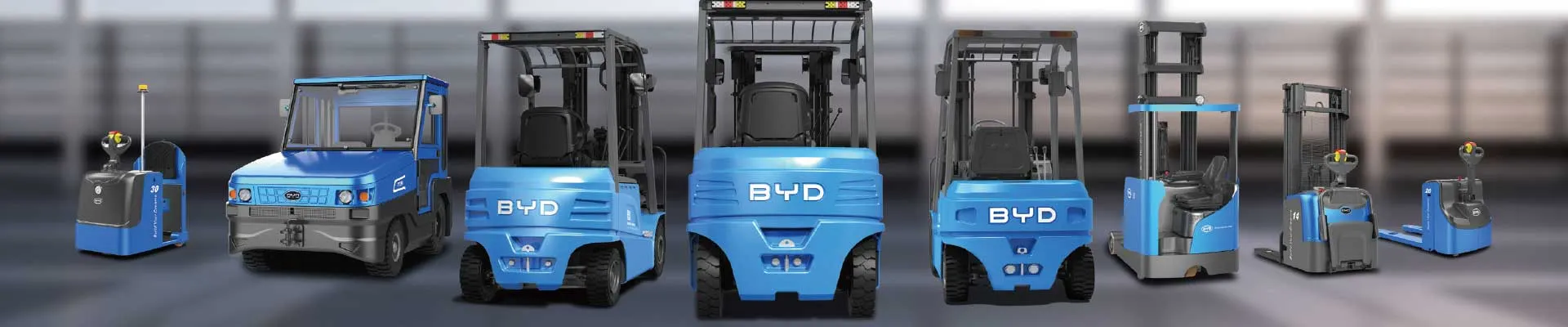
As low-carbon logistics becomes a mainstream development trend across the material handling industry, electric forklifts have gradually become the core equipment for most indoor and enclosed operation scenarios, replacing a large share of traditional internal combustion forklift applications. For frontline warehouse managers and equipment operators, systematic mastery of electric forklift related knowledge can help reduce unnecessary operation risks, lower long-term operating expenditure, and match the equipment value with actual business demands better.
Core Advantages of Electric Forklifts in Modern Warehousing
Compared with traditional fuel-powered handling equipment, electric forklifts produce no exhaust emission during operation, which can effectively avoid indoor air pollution and create a healthier working environment for on-site staff. Their overall operation noise level is also relatively lower, which fits the long-time operation demands of large distribution centers that run 24/7. The power consumption cost per unit working hour is generally lower than fuel cost for same load level, which can bring visible cost optimization effect after long-term use.
Standard Operation Guidelines for Daily Use
Before starting each shift, operators need to check the power status of the battery, the flexibility of steering and braking systems, as well as the intactness of cargo forks and safety guard components. It is not recommended to operate the equipment on slopes that exceed the official specified gradient, or carry overloaded goods beyond the rated load capacity, to avoid potential tilt or equipment damage risks. When the remaining battery power drops to the pre-set warning level, operators should arrange to return the equipment to the designated charging area in time, instead of forcing it to run for extra working tasks which may cause irreversible damage to the battery pack.
Routine Maintenance Tips to Extend Service Life
Daily cleaning work should be arranged after each use, to remove accumulated dust, sundries and spilled cargo residues on the equipment surface, especially the heat dissipation parts and the contact points of the battery connector. Operators should avoid exposing the equipment to long term high temperature or heavy rain immersion environment, to prevent circuit system short circuit risks. Regular inspection of tire wear condition, hydraulic system oil level and lubrication status of each movable component can help discover hidden problems in advance, and reduce unexpected equipment downtime probability.
Scenario-Based Usage Optimization Suggestions
For small and medium-sized warehouses that mainly handle light and medium goods within a short operation distance, matching the corresponding low load capacity electric forklift can avoid excess equipment function waste. For cold storage operation scenarios, users can refer to the relevant configuration suggestions to adjust the battery working parameters properly, to adapt to the low temperature working environment and guarantee stable operation performance.


