
 简体中文
简体中文 Русский
 Français
 Português
 Español
 لالعربية
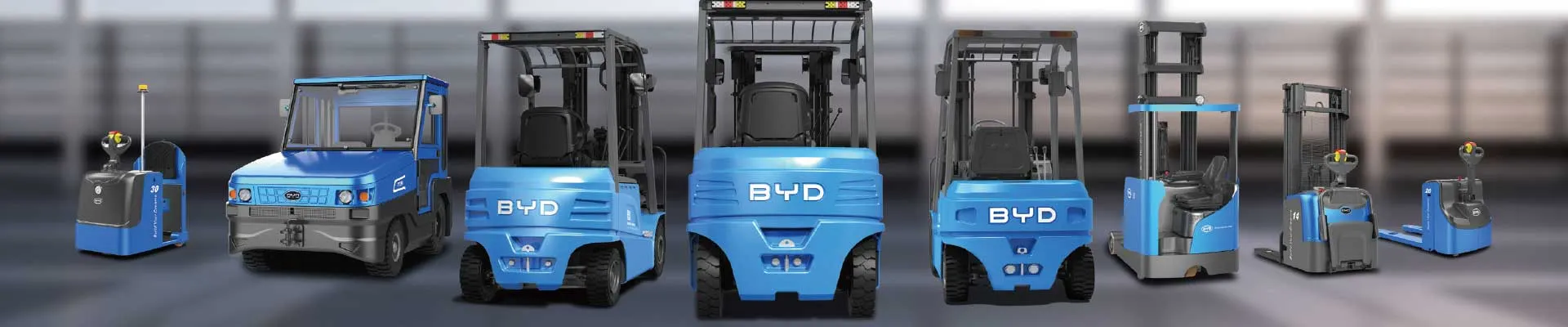
.jpg "Practical experience using narrow-aisle lithium-ion reach trucks within high-bay racking warehouses(figure1)")
As modern warehousing operations continue to pursue higher storage density, more facilities adopt high-bay racking layouts to maximize vertical space usage, which brings higher requirements for material handling equipment that can operate in narrow passages between rows of tall racks. Narrow-aisle lithium-ion reach trucks have become the common supporting solution for such scenarios, and years of on-site operation practice have summed up many practical actionable tips for logistics teams.
Before putting the equipment into formal operation, the first step is to complete on-site parameter matching and pre-debugging. Operation teams need to survey the actual minimum width of each aisle, the vertical clearance between rack layers, and the flatness error of the warehouse ground in advance. For high-bay racking warehouses, a tiny protruding point on the ground may cause scraping between the vehicle body and the rack column when the truck turns at a small angle. During debugging, adjust the minimum turning radius parameter of the reach truck to reserve a 15 to 20 cm safe margin between the vehicle and the rack edge, which avoids unnecessary redundant space occupation and further improves the effective storage area of the warehouse.
In daily routine operations, standardized operation habits can effectively reduce failure risks and improve working efficiency. For operating scenarios with rack height over 8 meters, the lifting height of the fork will block part of the forward view of the driver, so it is recommended to use the on-board position sensing auxiliary system to confirm the alignment between the fork tip and the pallet socket in advance, instead of leaning out of the cab for observation. It is not allowed to perform sharp steering actions in the narrow aisle, and the smooth power output characteristic of lithium-ion reach trucks allows drivers to adopt uniform acceleration and deceleration operation mode, which reduces the risk of pallet slipping during moving. For two-shift daily operation scenarios, teams can arrange 15 to 20 minutes of opportunity charging during non-peak hours, which avoids the whole-process battery replacement operation and extends the daily effective working time of each vehicle reasonably.
For daily maintenance work, the lithium-ion battery pack does not need regular water replenishment or electrolyte adjustment work, and operators only need to check for outer shell scratch, connection terminal looseness, and tire wear condition at the end of each shift. Regular inspection of the on-board warning lights and auxiliary lighting equipment also helps reduce safety risks in the low-light high-layer area of the high-bay racking warehouse. Reasonable application of such equipment can help well-managed high-bay warehouses improve storage space utilization by about 20%, and reduce the overall energy consumption of material handling links at the same time.


