
 简体中文
简体中文 Русский
 Français
 Português
 Español
 لالعربية
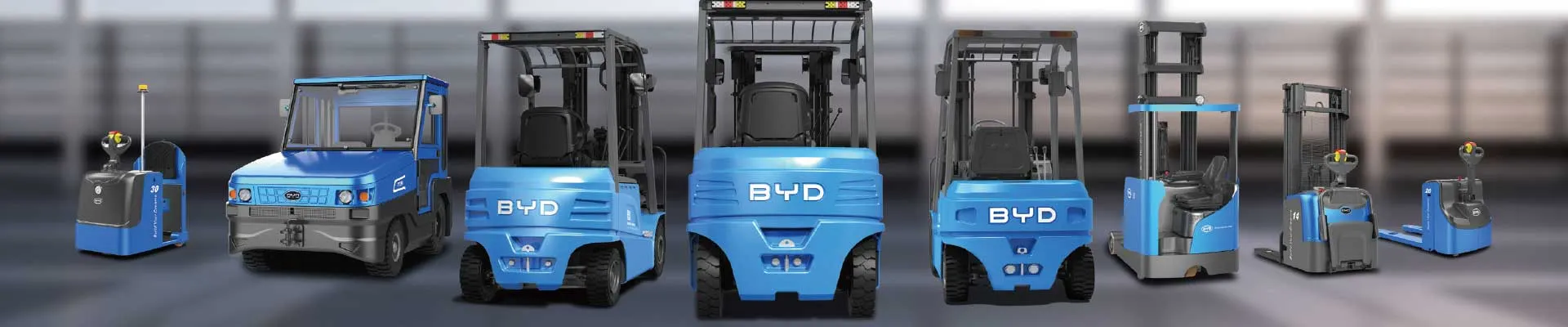
.jpg "Forklift Battery Refurbishment: Is It Worth It for Lithium Packs?(figure1)")
As low-carbon material handling becomes the mainstream trend in the industrial logistics sector, electric forklifts have gradually become the widely adopted equipment for most warehouse and factory operation scenarios due to their low noise, zero on-site emission and flexible control characteristics. This practical guide sorts out core common sense points for related practitioners to reference and adjust their daily management work properly.
Core Advantages of Modern Electric Forklifts
Different from traditional internal combustion handling equipment, electric forklifts rely on on-board energy storage systems to provide power output, which can effectively reduce the exhaust gas pollution generated in closed or semi-closed operation spaces. The overall vibration and noise level during operation is relatively low, which can improve the comfort of operators after long hours of work and reduce the interference to other surrounding production or warehousing processes. Most structural components of electric forklifts have no complex oil circuit systems, which can reduce the input of related consumables in the long-term use cycle.
Standard Daily Operation Specifications
Before starting each shift, operators need to check the remaining power level of the whole machine, the flexibility of the lifting and steering components, and the sensitivity of the braking system, and do not start the operation process when abnormal conditions are found that have not been properly handled. During the operation, operators should plan the driving route reasonably according to the on-site cargo stacking status and passage width, avoid sudden acceleration and sharp steering operations when carrying heavy loads, and control the lifting and lowering speed of the goods within a stable range to prevent the goods from slipping and falling. After the daily operation is completed, the equipment should be parked in the designated special area, the power supply should be cut off properly, and the surrounding sundries on the car body should be cleaned up.
Routine Maintenance and Care Tips
Daily maintenance work can be divided into daily basic inspection, weekly partial calibration and regular professional depth detection according to different frequency levels. The energy storage system should avoid long-term full power or zero power storage state as much as possible, and the dust and sundries accumulated in the heat dissipation structure should be cleaned regularly to maintain a stable heat dissipation effect. The wear degree of tire surface and transmission parts should be checked regularly, and corresponding lubrication treatment should be carried out in combination with the actual operating frequency to extend the overall service life of the equipment.
Scenario-based Efficiency Improvement Suggestions
For high-intensity continuous operation scenarios, a reasonable peak-shift charging or replacement power supply planning can be formulated to reduce the waiting time caused by insufficient power. For narrow passage operation scenarios, operators can carry out targeted operation skill training to give full play to the flexible steering characteristics of electric forklifts and improve the passing efficiency in the limited space.


