
 简体中文
简体中文 Русский
 Français
 Português
 Español
 لالعربية
.jpg "How to Build a Safe Battery Charging Area for an Electric Forklift Fleet(figure1)")
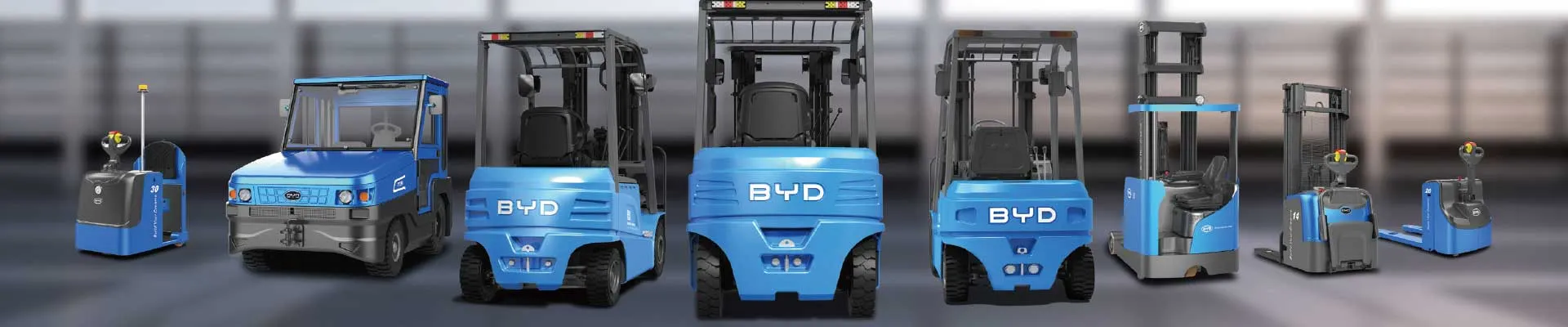
With the rapid development of low-carbon logistics and intelligent warehouse operation, electric forklifts have gradually become a core piece of equipment that supports daily material handling workflows across multiple industrial scenarios. Unlike traditional internal combustion counterparts, electric forklifts generate almost zero on-site emissions, operate with lower noise levels, and can adapt to narrow working corridors, closed storage spaces and other scenarios that have strict requirements on environmental indicators.
Core Performance Advantages of Modern Electric Forklifts
Most modern electric forklift models are equipped with energy-storage battery packs that support long continuous working hours, and their transmission systems are optimized to reduce unnecessary energy loss during frequent start and stop operations, which is very suitable for scenarios that require high-frequency material handling within 8 to 10 hours of daily working shifts. The control system of mainstream electric forklift products has been adjusted to be more user-friendly, so operators with basic industrial vehicle operation qualifications can get familiar with the operation logic in a short period of time without going through overly complicated pre-job training. The overall structural design of electric forklifts also takes into account the operation comfort for long-time operators, and the vibration generated during walking is controlled at a relatively low level to reduce work fatigue.
Standardized Operation Points for Safe Daily Use
To ensure the stable performance of electric forklifts during long-term use, operators need to carry out pre-start inspections before each shift, including checking the remaining battery power, the flexibility of the lifting and steering system, and the wear condition of the walking wheels. When the forklift is running, operators should avoid sudden acceleration and sharp turns as much as possible, and keep the load center within the allowable range specified in the product operation manual, to avoid potential safety hazards caused by unbalanced weight distribution. It is also not recommended to park the electric forklift in an area with accumulated water or high temperature for a long time, to prevent damage to the internal electrical components and unnecessary failure of the control system.
Routine Maintenance Tips to Extend Service Life
Daily maintenance work for electric forklifts does not require overly complicated operations. Users only need to arrange regular cleaning of the dust and sundries accumulated on the surface of the battery pack and the electrical connection points according to the use frequency, and check the tightness of each connecting part regularly. When the battery level drops to the pre-set low value, users should arrange charging in time, and avoid over-discharging the battery pack for a long time, which will affect the overall cycle life of the energy storage unit. For professional maintenance work that involves internal circuit debugging and component replacement, users can arrange for professionally certified technical personnel to complete the process, to ensure that the equipment is always in a good working state.


