
 简体中文
简体中文 Русский
 Français
 Português
 Español
 لالعربية
.jpg "Narrow Aisle Forklift Safety: Space, Speed and Awareness(figure1)")
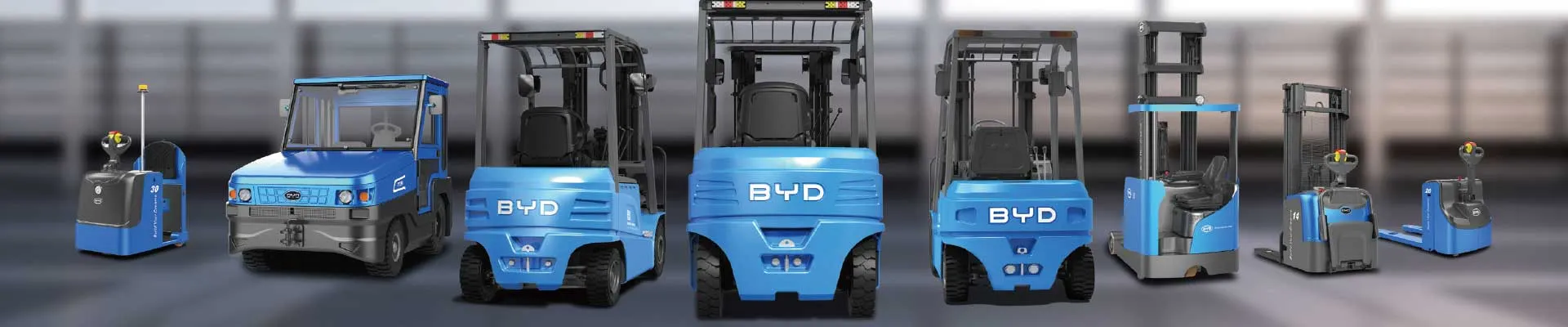
With the continuous development of green logistics industry, electric forklifts have become one of the most widely applied material handling equipment in indoor warehouses, distribution centers and retail storage scenarios in recent years. Mastering correct usage and maintenance rules can help operators give full play to the performance of the equipment on the premise of ensuring operation safety.
Core Performance Features of Modern Electric Forklifts
Compared with traditional internal combustion handling equipment, electric forklifts produce no tail gas during operation, and generate relatively low operation noise, which can adapt to the closed indoor operation environment without causing too much discomfort to surrounding workers. The operation cost of electric forklifts in daily use is relatively stable, and there is no need to purchase fuel consumables for power supply, and the power system structure is relatively simpler without complex oil circuit components, which reduces the requirement for professional maintenance capabilities to a certain extent.
Daily Scientific Maintenance Guidelines
For routine use of electric forklifts, operators need to complete basic pre-use inspection before each shift, check the remaining battery power, wear condition of solid tires, sensitivity of braking system and sealing performance of hydraulic lifting parts, and stop using the equipment in time if abnormal leakage or part damage is found. For equipment that is not used for a long time, relevant personnel need to arrange regular supplemental charging every week to avoid irreversible capacity loss of the battery caused by long-term over-discharge. It is also recommended to clean the dust and sundries accumulated at the cooling vent of the motor regularly, so as to maintain good heat dissipation effect of the power system.
Operation Safety and Efficiency Optimization Suggestions
Operators need to receive corresponding basic skill training before driving electric forklifts, and get familiar with the load limit and steering radius of the equipment they use. It is not recommended to overload the equipment for a long time in the process of transporting goods, and keep a low driving speed when passing narrow aisles or areas with dense personnel, and send prompt signals in advance before turning. For electric forklifts working in special humid or low-temperature storage scenarios, the insulation performance of the circuit system can be checked regularly to avoid potential safety hazards caused by moisture erosion. Reasonably planning the daily handling route can also reduce unnecessary driving distance, and help improve the overall operation efficiency of the entire warehouse handling link.


