
 简体中文
简体中文 Русский
 Français
 Português
 Español
 لالعربية
.jpg "Ergonomic Job Design for Forklift and Pallet Truck Operators(figure1)")
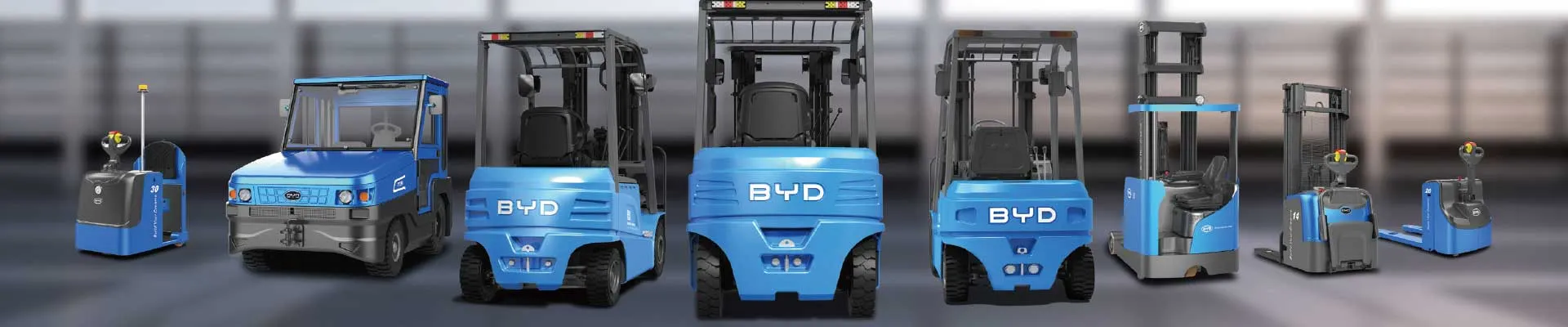
With the continuous promotion of low-carbon logistics concepts across the industrial sector, electric forklifts have become one of the most widely used material handling equipment in warehouse and industrial scenarios, bringing relatively stable operation experience and low emission performance for frontline workers. Mastering correct use and maintenance methods can help enterprises give full play to the value of the equipment in daily production.
Core Standard Operation Specifications
Before starting any operation, operators need to complete pre-inspection work, including checking the remaining battery level, braking sensitivity, steering flexibility and whether there is obvious obstacle around the operation area. During the driving process, avoid sharp acceleration, sudden braking and sharp turning at high speed, do not carry irrelevant personnel on the operating position, and never allow personnel to stand or walk under the lifted forks. For operation on sloped areas, keep the load facing the upper direction of the slope to avoid goods slipping off the forks, and do not turn on the slope with a gradient exceeding the equipment’s specified allowable value. Operators should strictly refer to the equipment’s rated load parameter during loading and handling, to avoid potential safety risks caused by overloading.
Daily Routine Maintenance Guidelines
Proper daily maintenance can effectively reduce the failure rate of electric forklifts and extend the overall service cycle of the equipment. For the power battery part, avoid deep discharge and excessive overcharging, keep the charging environment dry and ventilated, and regularly clean the dust and accumulated sundries at the power interface to prevent poor contact. Check the hydraulic system regularly to confirm whether there is oil leakage at the pipeline connection, and replace the corresponding lubricating oil and sealing parts according to the specified service cycle. Regularly check the wear degree of the solid or pneumatic tires, replace the tires in time when the wear limit is reached to keep the driving stability. After each operation, park the equipment in the designated fixed area, pull up the handbrake, lower the forks to close to the ground, and cut off the main power supply.
Scenario Selection and Efficiency Optimization Tips
Electric forklifts are more suitable for indoor closed warehouses, food and pharmaceutical storage areas, retail distribution centers and other scenarios that have high requirements for air quality and operation noise. To further improve the overall handling efficiency, the logistics management team can plan the driving path of the equipment reasonably according to the layout of the storage area, avoid frequent cross paths between different handling equipment, and organize regular standardized skill training for operators. These measures can help reduce unnecessary energy consumption and equipment wear, and create relatively stable long-term returns for the enterprise’s daily material handling work.


