
 简体中文
简体中文 Русский
 Français
 Português
 Español
 لالعربية
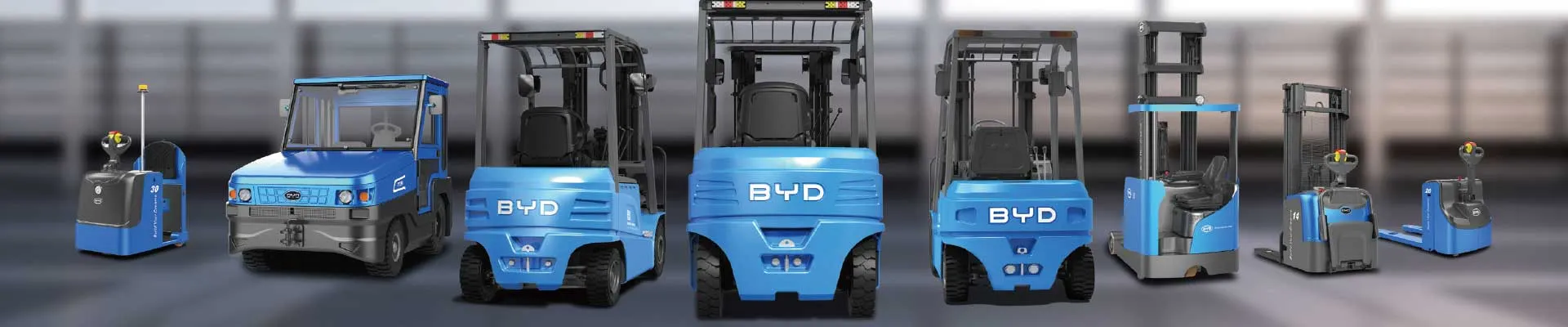
.jpg "Lithium-ion forklift with fast-charge package versus standard-charge package: site power demands(figure1)")
The widespread adoption of lithium-ion forklifts in material handling scenarios has made supporting charging configuration a core part of site operation planning. Many site managers tend to focus on charging efficiency only while ignoring the matching degree between charging package parameters and existing site power supply conditions, which may lead to hidden risks such as circuit overload or frequent power trip in daily operation.
For the standard-charge package that is widely configured for regular lithium-ion forklift fleets, its single-unit input power usually ranges from 3kW to 7kW, which can be adapted to common low-voltage industrial sockets inside most existing warehouse and factory sites. No extra special transformer or high-voltage circuit transformation is required for most small and medium-sized sites to deploy this kind of charging configuration. When multiple forklifts charge at the same time, operators only need to calculate the total load limit of the original power supply branch, and the operation process will not generate large instantaneous current fluctuation that affects the normal operation of other production, office or lighting equipment on the same circuit. This configuration is very suitable for sites whose forklift daily working hours are less than 6 hours, and users can arrange full battery replenishment during non-working hours at night without occupying working time.
For the fast-charge package designed for high-frequency continuous operation scenarios, its single-unit input power usually ranges from 15kW to 35kW, which needs to be equipped with an independent dedicated power supply circuit separately from the conventional daily power consumption loop. The instantaneous starting current of fast-charge equipment is 4 to 6 times that of standard charging equipment, so sites that plan to deploy multiple sets of fast-charge packages need to calculate the remaining capacity of the main transformer in advance, and apply for local power capacity expansion from the power supply department if necessary. The fast-charge deployment area also needs to be equipped with independent overload and leakage protection devices, to avoid triggering the total power protection of the whole site when high-power equipment is running. This configuration fits multi-shift operation scenarios where forklifts work more than 10 hours per day, and reasonable staggered charging scheduling can effectively reduce the peak power load pressure of the site.
Site managers are advised to make full investigation on existing power supply conditions, fleet scale and daily operation rhythm before selecting charging packages, to avoid unnecessary power transformation cost or insufficient power supply reserve. Reasonable pre-assessment can balance operation efficiency and electricity cost, and create stable supporting conditions for long-term fleet operation.


