
 简体中文
简体中文 Русский
 Français
 Português
 Español
 لالعربية
.jpg "Lithium Forklift Battery Longevity: Practices That Add Years(figure1)")
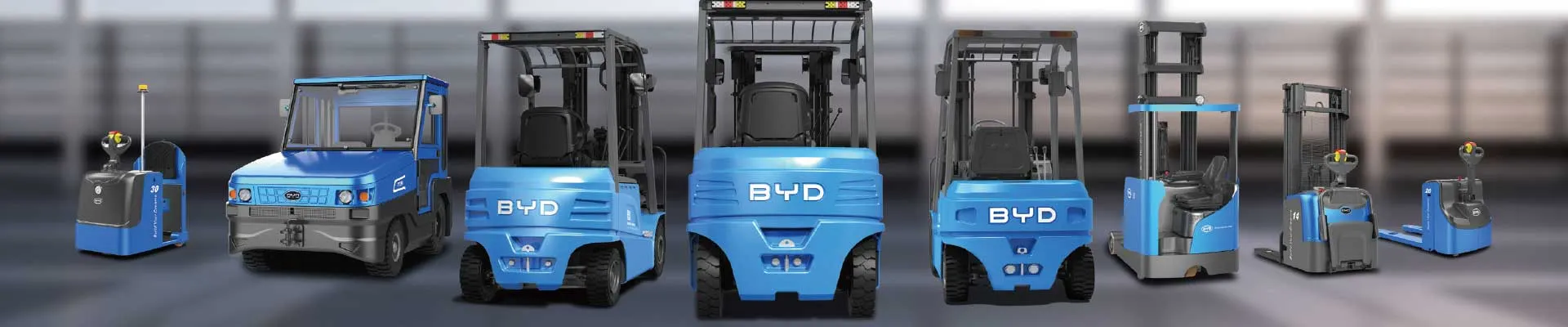
As low-carbon logistics becomes a mainstream development trend across the industrial sector, electric forklifts have gradually become one of the most widely adopted material handling equipment in indoor and semi-indoor storage scenarios. Mastering the core features, operation norms and matching rules of this kind of equipment can help enterprise teams get higher input-output ratio in daily material turnover.
Core Functional Advantages of Electric Forklifts
Different from internal combustion power equipment that generates exhaust gas during operation, electric forklifts complete power output through high-efficiency motor drive, which produces no local exhaust emission in the working area, and the operation noise is kept at a relatively low level, which can well meet the environmental requirements of closed warehouses, processing workshops and other spaces with high air quality requirements. The energy conversion efficiency of the whole power system is significantly higher than that of traditional internal combustion counterparts, and the daily operating energy cost is controlled at a relatively low level after long-term use, which is suitable for the continuous high-intensity material handling work of most conventional storage scenarios. The overall vibration level during operation is also relatively gentle, which can reduce the risk of loosening of precision parts carried in the transportation process to a certain extent.
Standardized Operation and Daily Maintenance Guidelines
Before each operation, operators need to check the remaining power of the power unit, the flexibility of the braking system, the stability of the lifting structure and the wear condition of the walking wheels first, to avoid hidden dangers caused by long-term neglect of minor wear. During the operation process, operators should not carry overloaded goods beyond the rated load range, avoid sharp steering on sloped roads, and do not leave the equipment with goods lifted in a parked state for a long time. In the daily maintenance link, the power unit should be charged in a dry and ventilated designated area, and the long-term deep discharge of the power unit should be avoided as much as possible to maintain the overall service life of the equipment. Regular cleaning of dust accumulation on the surface of the power and transmission components can also keep the equipment in a good running state.
Scenario Matching Suggestions for Different Working Conditions
When selecting suitable electric forklift products, enterprises can match the corresponding models according to their actual operation scenarios. For narrow channel high-level storage scenarios, equipment with small turning radius and compact body structure can be selected to give full play to the space advantage of high-level shelves. For scenarios with high sanitary requirements such as food and drug storage, models with fully sealed power structure and no leakage risk can be prioritized. For semi-outdoor working environments with frequent rain, products with corresponding waterproof protection level can be selected to adapt to the complex environment. Scientific selection and standardized use of electric forklifts can effectively improve the efficiency of material turnover in the whole warehouse, and also fit the general direction of low-carbon and environmentally friendly industrial operations at this stage.


