
 简体中文
简体中文 Русский
 Français
 Português
 Español
 لالعربية
.jpg "Forklift Safety on Loading Docks: Focus Points for Supervisors(figure1)")
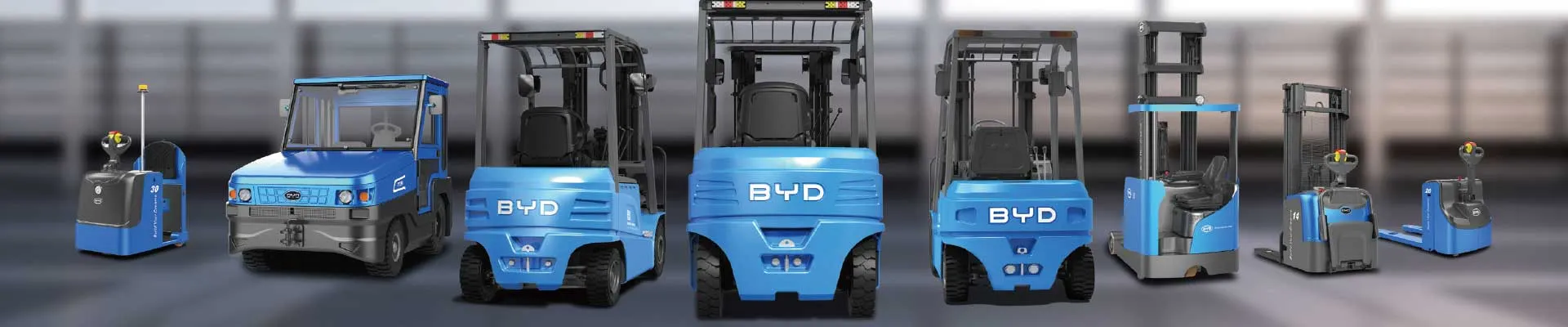
With the continuous promotion of low-carbon logistics concepts across the industrial sector, electric forklifts have gradually become core supporting equipment for warehouse material handling, port cargo transfer and factory internal transport scenarios. Different from traditional fuel-powered forklifts, electric models feature lower operating noise, zero on-site emissions and relatively lower long-term operating costs, which make them widely applied by operation teams in different industrial scenarios.
Basic Standard Operation Specifications for Electric Forklifts
Before starting the equipment, operators need to conduct a full pre-inspection, including checking the remaining power of the power module, the flexibility of the steering system, the sensitivity of the braking function, and whether the lifting forks have obvious deformation or damage. During the driving process, operators should keep the driving speed matching the surrounding scenario conditions, avoid sharp turns or sudden braking when carrying heavy loads, and do not allow personnel to stand on the forks to perform auxiliary operations. When the equipment is not in use for a long time, the forks should be lowered to a horizontal position close to the ground, and the power supply should be cut off in time to avoid unnecessary power consumption.
Daily Maintenance Points to Extend Stable Service Life
Regular and standardized daily maintenance can effectively reduce the failure rate of electric forklifts and prolong the stable operation cycle of the equipment. The power module is the key maintenance object, operators should follow the specified charging procedure, avoid over-discharging the power supply for a long time, and clean the dust and sundries on the surface of the power interface regularly to avoid poor contact. The walking and lifting transmission parts need to be coated with professional lubricating grease on a regular schedule, to reduce the wear caused by long-term friction between metal parts. After each high-intensity operation, the sundries wrapped around the wheel hub should be cleaned in time, to avoid abnormal noise or unstable driving caused by wheel jamming.
Scenario Adaptation Tips for Efficient Material Handling
In closed warehouse scenarios with high requirements for ambient air quality, electric forklifts can give full play to their advantages of no exhaust emission, and can cooperate with corresponding auxiliary attachments to complete different operations such as pallet stacking, box turning and soft bag handling. When working in humid or low-temperature scenarios, operation teams can make targeted adjustment to the equipment preheating procedure before starting, to ensure that all functional parts can reach the suitable operating state. Reasonable arrangement of the use frequency of different electric forklifts according to the division of warehouse operation areas can effectively reduce the idle rate of equipment, and further improve the overall operation efficiency of the whole logistics link.


