
 简体中文
简体中文 Русский
 Français
 Português
 Español
 لالعربية
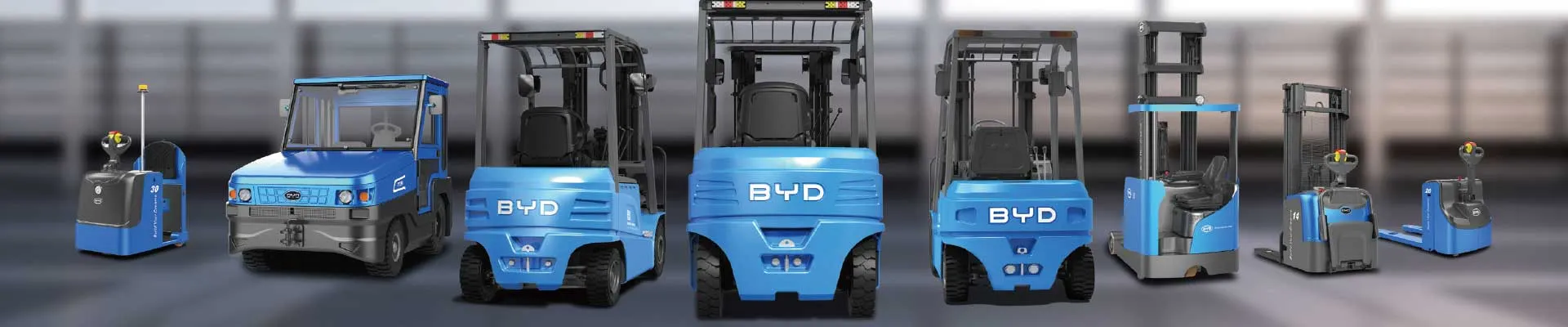
As low-carbon and high-efficiency core material handling equipment, electric forklifts are widely adopted in modern warehousing, manufacturing workshops and cold chain logistics scenarios. Mastering correct operation, maintenance and safety related knowledge can help teams give full play to the performance of the equipment, reduce operating costs, and avoid unnecessary operational risks.
Core Standard Operation Norms
Before starting the equipment every shift, operators need to conduct a pre-shift inspection covering the power system, braking system, steering function and fork structure, to confirm no abnormal sound or loose parts exist. During the operation process, operators should keep the running speed controlled within the specified range, avoid sharp turning or sudden braking when carrying loaded goods, and keep a safe distance with surrounding personnel, shelves and obstacles. When stacking or unstacking goods, operators should adjust the fork spacing according to the size of the goods, keep the goods in the center of the fork bearing area, and avoid partial load or overloading that may affect the stability of the vehicle.
Routine Maintenance Suggestions
Regular maintenance work can effectively extend the service life of electric forklifts, and reduce the probability of sudden equipment failure in peak operation periods. For the power system, operators should follow the official guidance for charging operations, avoid over-discharging the power unit for a long time, and clean the dust on the surface of the power module periodically to maintain good heat dissipation performance. For the walking and lifting mechanism, users should add proper amount of lubricating grease to the rotating and moving parts on schedule, check the wear degree of the tire and transmission parts regularly, and replace the worn parts in time when the wear degree reaches the set threshold. The surface of the vehicle body can be cleaned regularly to remove the accumulated cargo residue and dust, which can also help operators find hidden cracks or damage on the vehicle shell in time.
Safety Management for Typical Scenarios
In closed indoor warehouse scenarios, operators should pay extra attention to the ventilation condition of the working area, and avoid long-time continuous operation in narrow and poorly ventilated small space. When working on the ramp with small gradient, operators should keep the load facing the upper direction of the ramp, and avoid turning on the ramp to prevent sideslip. For scenarios with low temperature such as cold chain storage, relevant adaptive adjustment should be made to the power system and hydraulic oil according to the actual ambient temperature, to ensure the equipment can run stably under low temperature conditions. After the daily operation is finished, operators should park the electric forklift at the designated parking area, lower the fork to the lowest position, cut off the main power supply, and confirm no potential safety hazard exists before leaving.


