
 简体中文
简体中文 Русский
 Français
 Português
 Español
 لالعربية
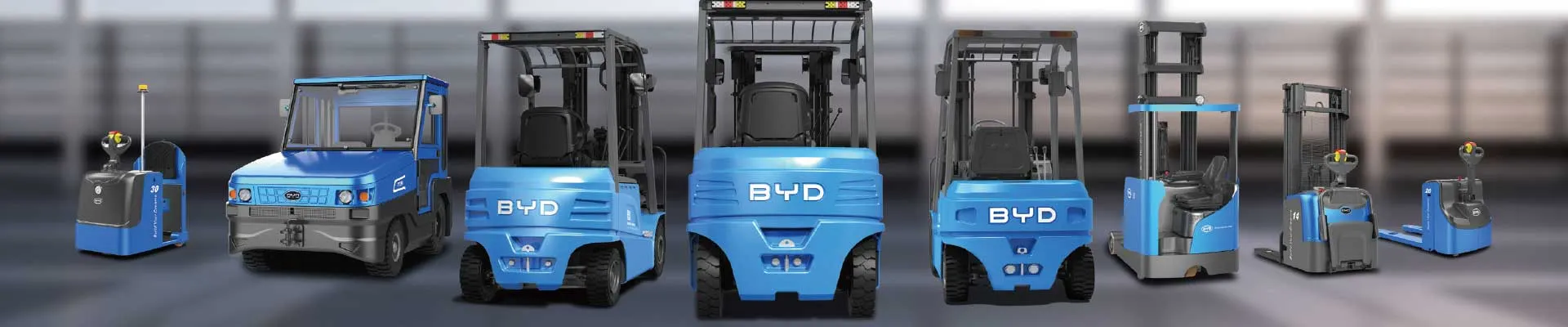
.jpg "- Middle East Demand for Electric Forklifts: UAE and Saudi Arabia in Focus(figure1)")
With the continuous development of new energy material handling industry, electric forklifts have gradually become one of the most widely used carrying equipment in indoor logistics scenarios in recent years, and relevant systematic operation and maintenance knowledge can help practitioners give full play to the inherent advantages of such equipment.
Core Performance Characteristics of Electric Forklifts
Different from traditional internal combustion power material handling equipment, electric forklifts produce no exhaust gas during normal operation, and the overall operating noise is controlled at a relatively low level, which can meet the environmental access requirements of closed spaces such as food processing workshops, pharmaceutical storage areas and precision electronics warehouses. The power output of the whole machine is relatively stable during operation, and the vibration amplitude of the lifting and tilting system is small, which can reduce the risk of damage to fragile goods in the handling process.
Standard Operation Specification Points
Before each operation, operators need to check the remaining power level, braking sensitivity, lifting flexibility and the cleanliness of the surrounding operation area to avoid hidden dangers caused by unobvious obstacles. Operators need to receive corresponding pre-job skill training, strictly follow the rated load range to carry goods, avoid turning sharply on the ramp, and keep the fork body at a low safety height when moving for a long distance, so as to reduce the risk of goods falling.
Daily Maintenance Guidelines
In daily maintenance work, staff should regularly check the battery state, avoid deep over-discharge in daily use, and keep the battery power in a reasonable interval when the equipment is parked for a long time. It is also necessary to regularly clean the heat dissipation structure of the driving motor, check the sealing state of the hydraulic oil circuit, and arrange professional personnel to inspect the wear degree of the walking components regularly, so as to prolong the overall service life of the equipment to a certain extent.
Scenario-based Efficiency Optimization Suggestions
In the daily warehouse operation, the operation team can plan the handling route reasonably according to the real-time goods distribution, adjust the allocation of equipment resources during the peak period of goods incoming and outgoing, and select suitable auxiliary accessories according to the common specifications of on-site pallets, which can effectively improve the overall turnover efficiency of the material handling link. As the supporting technology of the whole industry continues to iterate, the applicable scenarios of electric forklifts will be further expanded, and systematic operation and maintenance knowledge will become the necessary skill reserve for relevant practitioners.


