
 简体中文
简体中文 Русский
 Français
 Português
 Español
 لالعربية
.jpg "Electric Pallet Trucks for Cold Storage: A Buyers Checklist(figure1)")
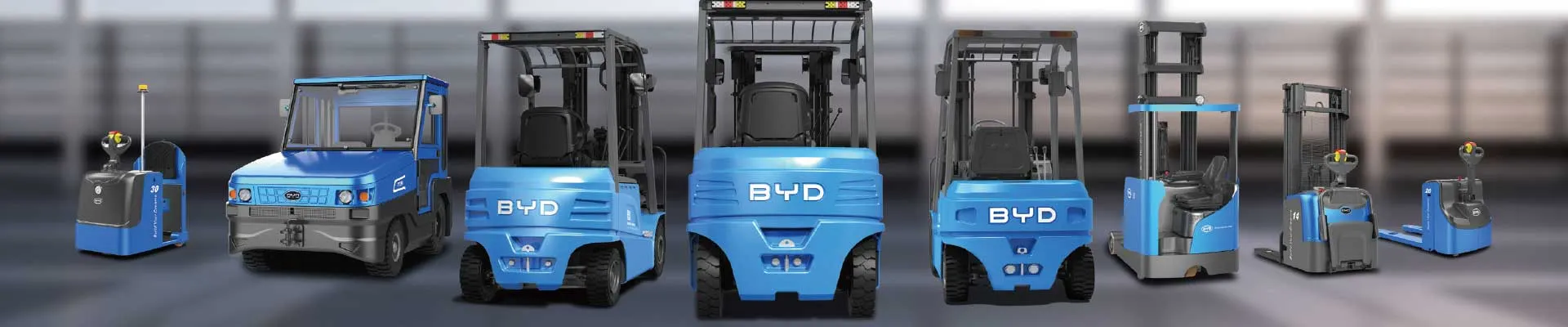
As zero-emission material handling equipment widely applied in warehouse, manufacturing plant and distribution center scenarios, electric forklift has gradually occupied a larger share of the logistics equipment market in recent years, for its lower noise output, lower long-term operation cost and more friendly indoor operation performance. Mastering standardized operation rules and reasonable maintenance methods can help operation teams give full play to the advantages of this equipment, reduce unnecessary downtime and extend the whole service life of the unit.
Core Pre-operation Safety Check Protocols
Before starting any daily shift operation, operators need to complete a series of basic inspections without skipping steps. First, check the remaining power level of the power pack to confirm it can support the expected operation volume of the whole shift, to avoid sudden power loss in the middle of handling that may cause potential safety risks. Second, test the flexibility of the lifting system, steering mechanism and braking system, to confirm there is no abnormal stuck or delayed response phenomenon. Operators also need to check the working condition of all lighting and warning components, especially for operations that will be carried out in relatively dim inner shelf areas or night shift environments.
Routine Daily Maintenance Best Practices
Scientific daily maintenance does not require overly complicated professional operations, and most steps can be completed by on-site operators within 15 minutes after the end of each shift. Operators need to wipe off the dust, residual goods debris and accumulated moisture on the surface of the equipment and key moving parts, to avoid corrosion or abnormal abrasion of components caused by long-term attachment of foreign matter. They also need to check the tightness of all connecting fasteners regularly, and arrange for professional technicians to conduct a full deep inspection every fixed cycle, to replace worn parts in time before obvious failure occurs.
Energy Efficiency Promotion Strategies
Adjusting operation habits appropriately can effectively improve the single charge working time of the electric forklift, so as to reduce the frequency of charging and further improve the overall operation efficiency. Operators can plan a reasonable handling route in advance according to the location of incoming and outgoing goods, to avoid frequent sharp turns and sudden acceleration in narrow channel scenarios, which will cause extra unnecessary power consumption. It is also suggested to avoid overloading the equipment beyond the rated load limit for a long time, which will not only increase power consumption sharply, but also bring extra abrasion to the lifting and bearing system.


