
 简体中文
简体中文 Русский
 Français
 Português
 Español
 لالعربية
.jpg "Shared Warehouse Spaces: How to Keep People and Forklifts Apart(figure1)")
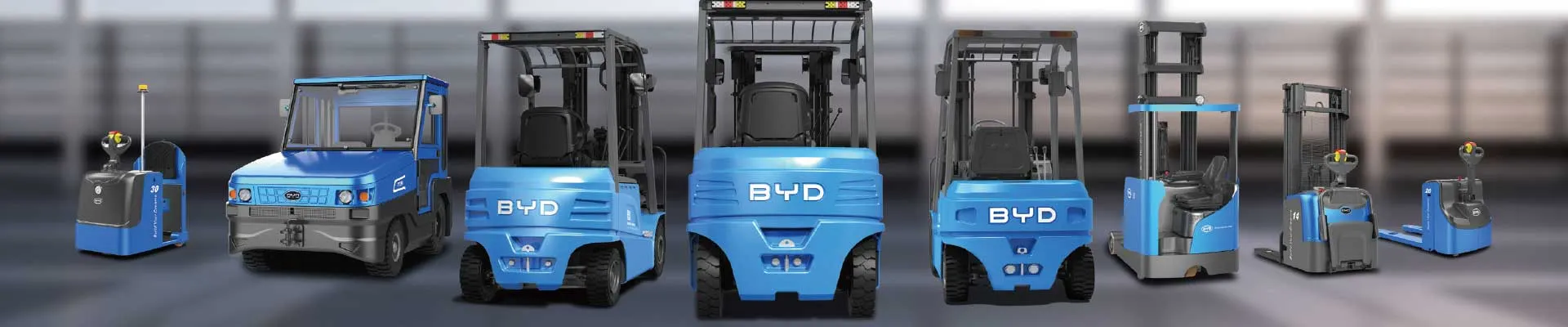
As low-carbon logistics development gains momentum across the global supply chain, electric forklifts have become one of the most widely deployed material handling equipment in indoor and semi-enclosed operation scenarios in recent years. Mastering systematic knowledge of electric forklift usage and management can help operation teams give full play to the equipment’s inherent performance while lowering overall long-term operation costs.
Core Performance Characteristics of Electric Forklifts
Unlike internal combustion counterparts, electric forklifts rely on battery power as the core energy source, producing almost no exhaust emissions during the whole operation process. The whole machine has relatively low vibration and noise when running, which can meet the operation requirements of enclosed spaces such as food storage warehouses, pharmaceutical storage areas and high value-added commodity distribution centers. Most of the current mainstream models have compact body size, which can adapt to narrow channel operation conditions, and will not cause additional interference to the surrounding working environment.
Standard Operation Specifications for Daily Use
Operators need to receive systematic pre-job training before formally driving the electric forklift, and carry out necessary pre-start checks for braking systems, light indication functions, power storage status and fork structure integrity. During the operation process, the load should be placed smoothly on the pallet frame center, and no over-height stacking or over-rated load carrying behavior is allowed. When driving in pedestrian-intensive areas, operators need to control the running speed within a safe range, and give prompt reminders through sound and light signals when turning or passing intersections.
Routine Maintenance and Management Suggestions
After each shift, operators should wipe the dust and sundries attached to the surface of the equipment in time, and check the power system connection status to avoid the potential safety hazard of loose wiring. The battery pack should be charged in the specified special area, and the charging process should be completed in accordance with the standard process to avoid over-discharging or over-charging behavior. Regular professional inspection of the motor, control module and hydraulic lifting structure can effectively reduce the probability of unexpected equipment failure, and extend the overall service cycle of the equipment on the premise of controlling the comprehensive use cost.
Scenario-based Efficiency Optimization Methods
For different types of warehouse operation scenarios, the configuration and use mode of electric forklifts can be adjusted appropriately. For high-frequency and short-distance material handling scenarios, the corresponding personnel and equipment scheduling mechanism can be optimized to reduce the unnecessary idle time of the equipment. For low-temperature operation scenarios, proper thermal insulation protection of the battery power supply part can maintain the stable output performance of the equipment.


