
 简体中文
简体中文 Русский
 Français
 Português
 Español
 لالعربية
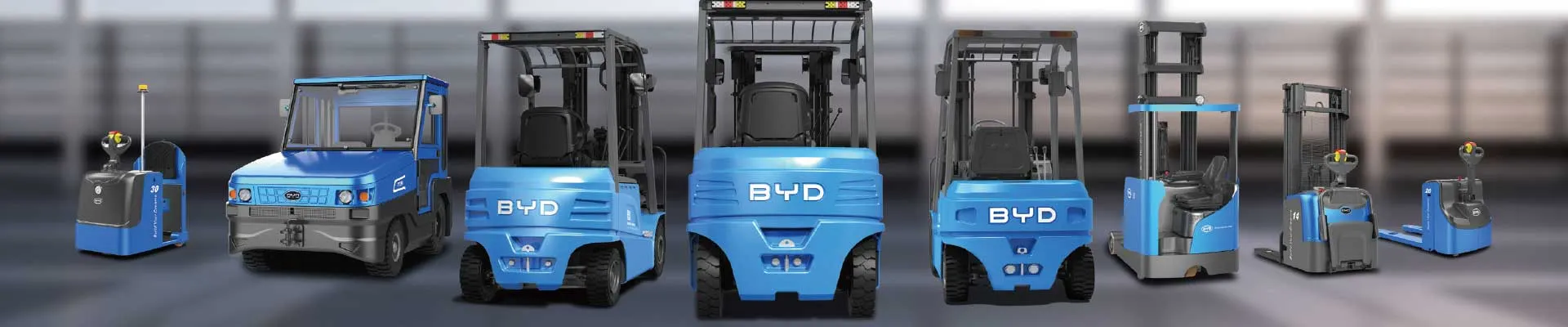
.jpg "Narrow Aisle Operations: A Forklift Safety Framework(figure1)")
Along with the accelerating low-carbon transformation of the global logistics industry, electric forklifts have gradually become one of the most common core handling equipment in indoor and closed operation scenarios, bringing new adjustment directions for the daily operation management of warehousing, manufacturing, port and related industries. This guide sorts out systematic practical knowledge for relevant practitioners from multiple dimensions, to provide objective reference for rational equipment use and management.
Core Advantages of Electric Forklifts in Conventional Operation Scenarios
Compared with traditional internal combustion handling equipment, electric forklifts produce no direct exhaust emission during operation, which can meet the environmental protection requirements of enclosed spaces such as food processing workshops, cold storage and precision parts warehouses. Their overall operation noise is relatively low, which can reduce interference to surrounding staff and fixed equipment, and the average vibration amplitude in operation is smaller, which can lower the risk of damage to fragile or high-precision goods in the handling process. The operation control logic of most electric forklifts is more friendly for new operators to get familiar with quickly, which can shorten the training cycle of post personnel to a certain extent.
Key Points of Routine Maintenance for Electric Forklifts
Regular standardized maintenance work can effectively reduce unexpected failure rate and prolong the overall service cycle of the equipment. Operators need to check the status of power components, tire wear degree and brake sensitivity before each shift, and clean the dust attached to the body surface and heat dissipation components after daily operation. It is also necessary to arrange regular professional inspection on power system, walking system and hydraulic lifting system at specified intervals, to replace worn parts in time according to the actual operation consumption, rather than waiting for obvious faults to appear before taking targeted maintenance measures.
Scenario-adaptive Operation and Energy Efficiency Optimization Methods
When using electric forklifts, operators should select appropriate load parameters and driving speed according to the actual site conditions, rather than operate under overloaded state for a long time. Reasonable scheduling of vehicle operation paths can reduce unnecessary frequent start and stop, so as to improve the average energy utilization efficiency. For operation teams with multiple electric forklifts, they can set up unified power management arrangements to arrange centralized charging at the non-peak period of operation, which can reduce the impact of frequent power shortage on the overall operation rhythm.


