
 简体中文
简体中文 Русский
 Français
 Português
 Español
 لالعربية
.jpg "MHE Safety and Handling: Reiterating the Basics That Get Skipped(figure1)")
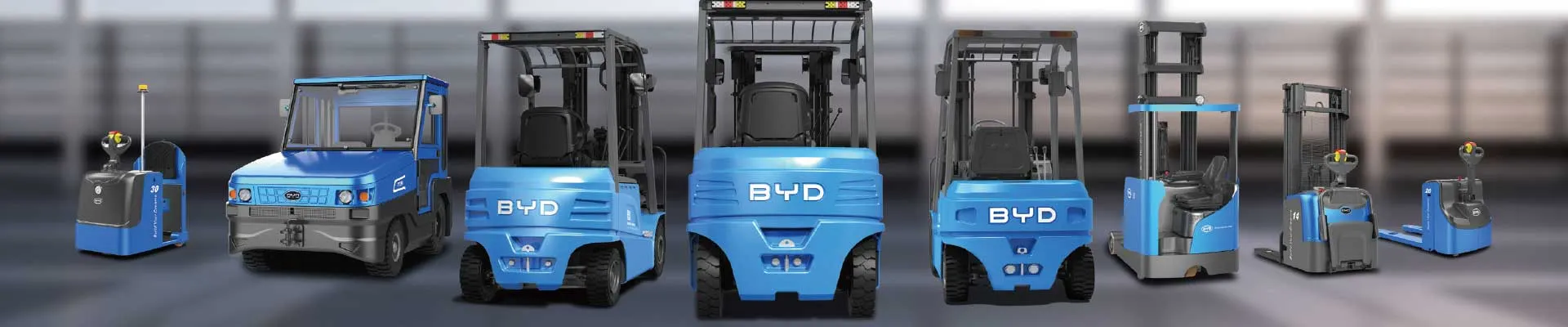
Against the background that the global warehousing and logistics industry is increasingly pursuing low-carbon operation and high handling efficiency, electric forklifts have gradually become one of the most widely used material handling equipment in closed operation scenarios. Many front-line operators and warehouse managers still lack systematic cognition of the full-value utilization methods of electric forklifts, which restricts the further optimization of overall operation efficiency.
Core Performance Advantages of Electric Forklifts for Scenario Adaptation
Compared with traditional internal combustion handling equipment, electric forklifts produce no tail gas emission on the operation site, and the operation noise is controlled at a relatively low level, which will not cause continuous interference to the working environment of closed warehouse spaces. The vibration generated during the operation of the power system is smaller, which can reduce the vibration damage risk to precision electronic parts, fragile industrial products and other special goods during handling, and it is more suitable for operation scenarios with high requirements for environmental sanitation such as food storage and pharmaceutical distribution. The energy consumption cost per unit operation time is relatively stable, which can help the operation side to make long-term cost budget more conveniently.
Standardized Daily Maintenance Measures to Extend Equipment Service Cycle
Regular standardized maintenance is the core premise to keep electric forklifts in good working condition for a long time. Operators need to check the remaining power status and the surface cleanliness of the power battery pack before each shift, confirm that the electrolyte level of the battery is kept within the specified safe range, and carry out charging operations in a dry and ventilated special area to avoid potential safety hazards caused by damp environment. It is also necessary to regularly check the sealing performance of the hydraulic lifting parts, the sensitivity of the braking system, and the unobstructed state of the heat dissipation holes on the body surface, and remove the accumulated dust and debris near the heat dissipation structure in time to prevent the power components from overheating during long-time continuous operation.
Scientific Operation Specifications to Reduce On-site Safety Risks
All personnel operating electric forklifts need to receive systematic pre-job skill training, and master the matching relationship between the allowable load capacity of the equipment and the lifting height of the goods. During the operation process, overloading is not allowed, and no personnel are allowed to stand under the lifting forks. When the equipment needs to stay on the working site for a long time, the operator should pull up the hand brake completely and lower the lifting forks to the horizontal position close to the ground. It is not allowed to drive the equipment diagonally on the ramp, so as to avoid the risk of sideslip. The operation side can arrange regular performance calibration for the load sensing component to ensure that the operator can accurately grasp the current load state of the equipment in real work. With the continuous expansion of green logistics popularization, the application scenarios of electric forklifts will be further enriched, and mastering professional use and management skills will help relevant practitioners give full play to the use value of such equipment.


