
 简体中文
简体中文 Русский
 Français
 Português
 Español
 لالعربية
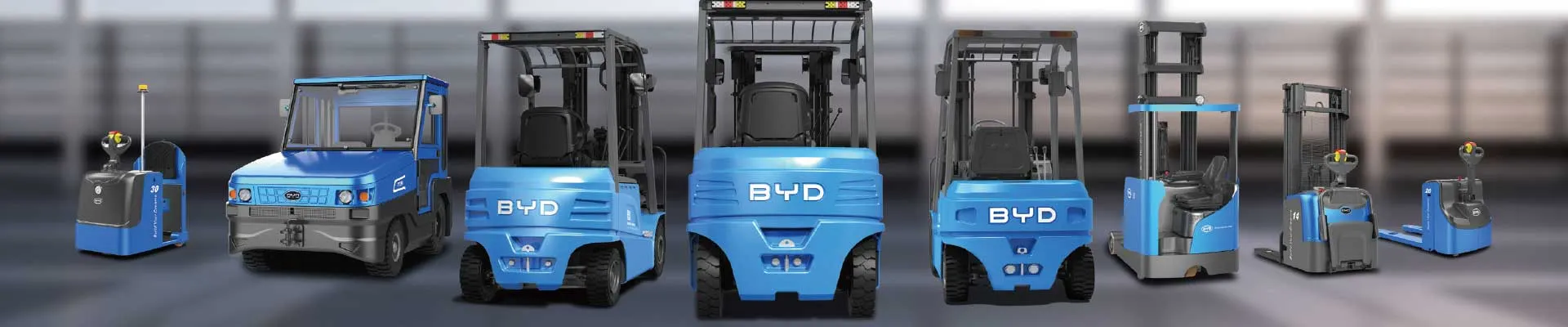
As low-carbon industrial logistics continues to develop across global warehousing and manufacturing sectors, electric forklifts have become one of the most widely adopted material handling equipment for indoor and semi-enclosed operation scenarios. Unlike traditional internal combustion counterparts, these electric-powered units rely on battery systems to deliver stable output, while generating far less noise and zero on-site exhaust emission. This practical guide covers core operation and management points that help on-site operators and facility managers maximize the value of their electric forklift fleets in daily use.
Core Pre-Operation Check Procedures
Before starting any shift, operators are advised to complete a series of standardized visual and functional checks to identify hidden risks in advance. First, inspect the exterior structure of the vehicle, including the fork arm, load backrest, mast and tire condition, to confirm no obvious deformation, crack or abnormal wear that may affect operation safety. Next, test all control functions including lifting, tilting, steering, braking and warning lights, to make sure every response meets normal operation requirements. It is also necessary to confirm the remaining battery power level is sufficient to cover the planned workload of the shift, to avoid sudden power loss in the middle of material handling tasks.
Standardized Operation Practices for Safety and Stability
During actual operation, operators need to strictly follow the rated load capacity specified by the equipment parameter, and never carry over-limit cargo that exceeds the designed load range. When lifting or lowering cargo, keep the movement smooth and avoid sharp, sudden acceleration or deceleration that may cause cargo slipping. For indoor narrow aisle operation, maintain a proper safe distance with surrounding storage racks, stacked goods and walking personnel, and reduce driving speed appropriately when passing intersections or blind areas. It is also recommended to keep the load at a proper low height when driving for long distances, to lower the overall center of gravity of the vehicle and reduce rollover risk.
Routine Maintenance Guidance to Extend Service Cycle
Regular daily and weekly maintenance work helps reduce unnecessary wear of core components and lower long-term operating cost. After each shift, operators are suggested to clean the dust and debris attached to the vehicle body, especially the ventilation gaps of the battery and motor, to avoid overheating caused by blocked heat dissipation paths. Do not leave the battery in a fully discharged state for long periods, and arrange timely charging after the remaining power drops to the recommended threshold. For regular scheduled inspection work, relevant personnel can check the tightness of connecting parts, lubricate the movable mast components regularly, and replace worn out accessories in time to keep the equipment in good working condition.
Energy Efficiency Optimization Strategies
Reasonable fleet scheduling and operation adjustment can further improve the overall energy utilization efficiency of electric forklifts. Facilities can arrange proper distribution of handling tasks according to the remaining power of each unit, to reduce the number of unnecessary long-distance driving back to the charging area. For low-intensity operation scenarios with small load requirements, select corresponding matching small-tonnage electric forklifts instead of using high-power units, to reduce unnecessary power consumption. These small adjustments in daily management can bring continuous positive effects on overall operation cost control.


