
 简体中文
简体中文 Русский
 Français
 Português
 Español
 لالعربية
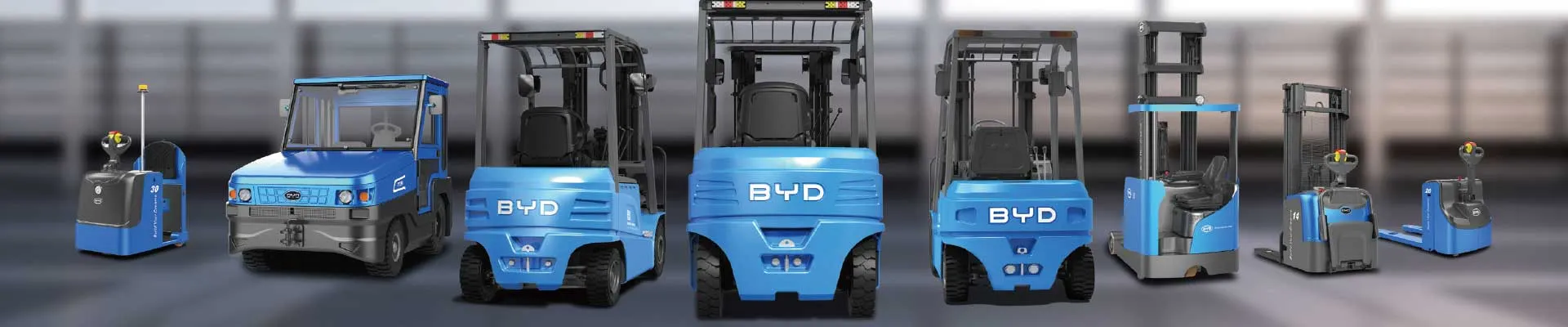
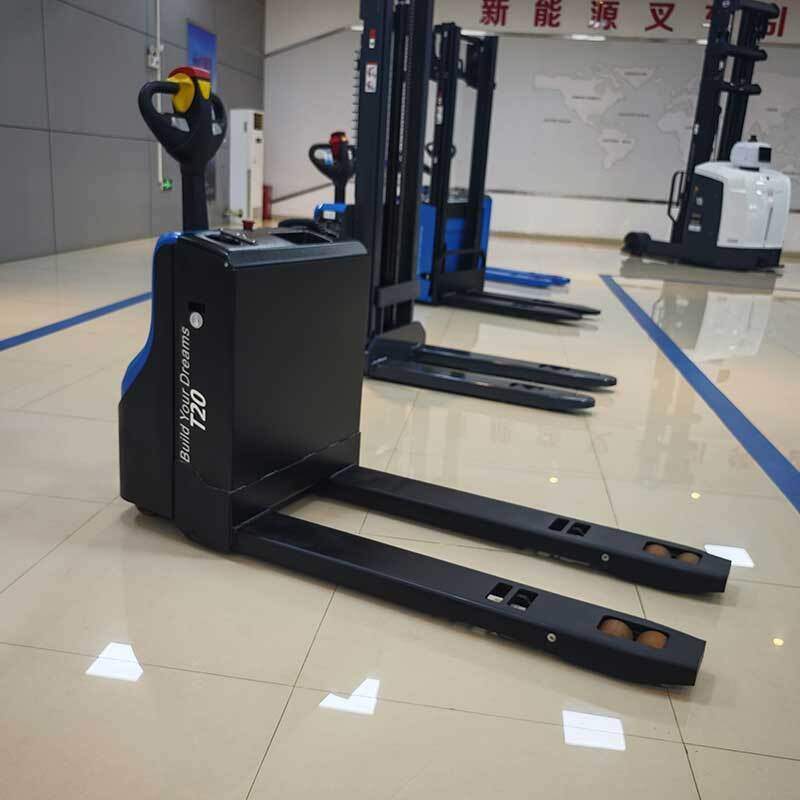
Electric pallet truck is a core piece of equipment for short-distance material transport in modern warehouses, whose operation accuracy directly relates to cargo condition, handling efficiency and on-site operation safety. Many frontline operators, even those with months of work experience, may still face common problems such as misalignment of forks and pallet openings, unbalanced load lifting and position deviation during stacking, which will cause extra cargo loss and unnecessary operation delay. Targeted repeated pallet-handling drills can effectively help operators build more accurate operation perception, without requiring complicated additional equipment investment.
Before starting all formal drills, operators need to complete basic pre-training preparation first. Clear up the designated training area to remove all irrelevant obstacles, place standard-sized empty pallets, and draw clear positioning marking lines on the flat ground. New operators can first spend 10 to 15 minutes to get familiar with the acceleration and braking response delay of the vehicle, to master the appropriate force of controlling the operating lever, and avoid sudden acceleration or sudden braking in the process.
The first basic drill is the fixed-point pallet insertion practice. Draw three parallel identification lines on the ground, place the empty pallet 10 cm behind the rearmost line, and the operator drives the vehicle to approach slowly from the starting point 3 meters away. Adjust the fork spacing in advance to match the size of the pallet opening, control the moving speed at the lowest gear, and make sure the forks are fully inserted into the bottom of the pallet without touching any outer edge of the pallet. Operators can repeat this practice until the deviation of 10 consecutive operations is no more than 1 cm, which effectively exercises their distance perception and micro-adjustment control ability of vehicle movement.
The second drill is the low-height stacking accuracy practice. Stack empty pallets at the designated marked position on the ground, require the four edges of the upper and lower stacked pallets to be completely aligned with the deviation within 2 cm. Operators can gradually add load from half load to full load in the practice process, to master the speed control of lifting and lowering under different load weight, and avoid damaging the bottom of the pallet or scraping the outer package of goods during the operation.
The third drill is the narrow aisle positioning practice. Build a simulated narrow aisle whose width is only 20 cm wider than the vehicle body, place 3 pallets to be handled at different positions in the aisle, and require operators not to touch the guard plates on both sides of the aisle during the whole process, complete the pick-up, transport and unloading work in sequence. Arranging these targeted drills for 30 minutes 1 to 2 times a week can steadily improve the overall operation level of the team, and bring stable optimization to the daily operation of the warehouse.


