
 简体中文
简体中文 Русский
 Français
 Português
 Español
 لالعربية
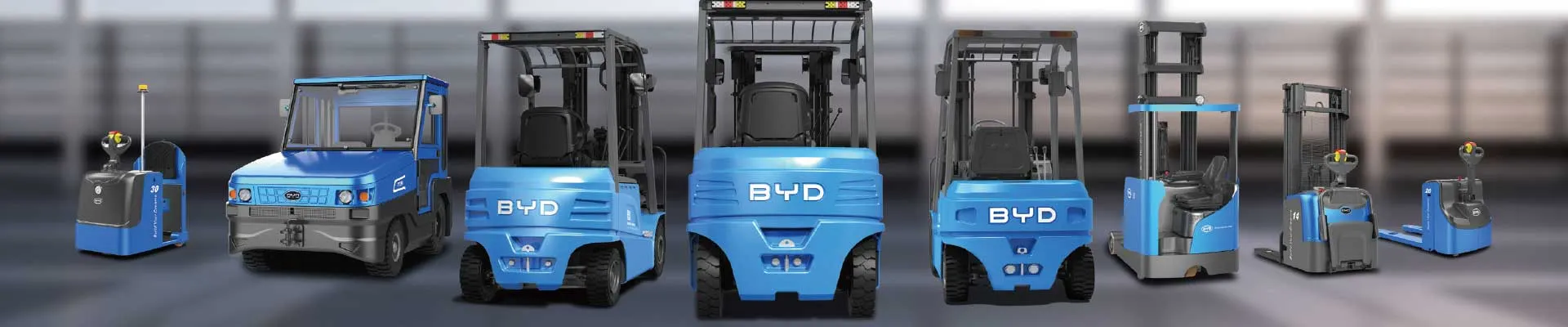
.jpg "Safe towing practices when using electric forklifts for trailer movements(figure1)")
As electric forklifts are widely adopted in modern warehousing, manufacturing and logistics scenarios, trailer towing movement has become a common daily operation scenario for material handling teams. Improper towing behaviors may lead to risks including vehicle sideslip, trailer rollover, collision with surrounding facilities or personnel, which will cause unnecessary property loss and personal injury. Following standardized safe towing practices can effectively eliminate most hidden dangers and ensure stable operation of on-site work.
The first core part of safe towing is full pre-operation preparation and comprehensive inspection. Before starting any towing task, operators need to first confirm that the total load of the trailer plus the cargo inside does not exceed the rated allowable towing weight of the matched electric forklift. Next, check the connection assembly between the forklift and the trailer, confirm there is no obvious crack, excessive wear or loose fastener on the towing hook, pin shaft and connection frame, and verify that the locking structure can be fixed firmly. Operators also need to check the tire condition and braking performance of the towed trailer, confirm the operation route has no sundries, potholes, wet slippery areas, and no irrelevant personnel stay within the operation range.
During the towing operation, operators must strictly follow the speed management rules. The driving speed should not exceed 5km/h in open flat areas, and the speed should be controlled below 3km/h in narrow passages, areas with frequent pedestrian flow or low visibility. When turning, operators need to decelerate in advance and reserve enough turning radius to avoid the trailer scraping surrounding racks, goods or other facilities caused by too small turning angle. It is not allowed to conduct sudden acceleration, sudden braking or sharp lane change during the whole towing process. Operators need to keep continuous attention to the running state of the following trailer, and stop the vehicle for inspection immediately if abnormal jitter or abnormal sound is found at the connection part.
After the towing operation is completed, operators should park the electric forklift and trailer at the designated safe parking area, pull up the hand brake stably, disconnect the connection accessories and place them in the special storage area to avoid random placement causing tripping risk. Operation teams should arrange regular maintenance and inspection for the towing related components, and organize regular safety skill training for all on-site forklift operators to consolidate safe operation awareness.
Compliance with the above practical safe towing norms can effectively reduce the occurrence of operation accidents, and create a more reliable and stable working environment for on-site material handling.


