
 简体中文
简体中文 Русский
 Français
 Português
 Español
 لالعربية
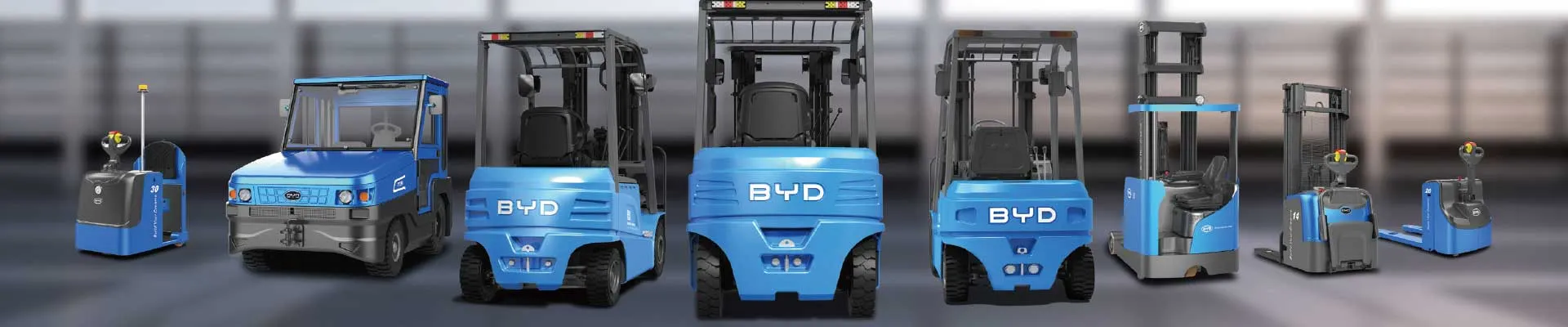
.jpg "Electric forklift with regenerative braking versus without: energy and brake-wear comparison(figure1)")
With the wide application of electric forklifts in modern warehousing, manufacturing and logistics scenarios, users are paying more attention to the full life cycle operation cost of equipment rather than only focusing on initial procurement cost. The braking system, as a core component closely related to driving safety, energy consumption and maintenance expense, has become a key reference point for many users to select suitable forklift models.
For electric forklifts not equipped with regenerative braking systems, all deceleration and parking processes rely entirely on friction braking structures. When the driver presses the brake pedal, the brake caliper clamps the hub to generate friction to offset the kinetic energy of the moving vehicle, and all the mechanical energy generated by vehicle driving, load lowering and downhill sliding will be converted into thermal energy and dissipated directly into the surrounding air, with no energy recovery process involved. Friction pads will be triggered for every deceleration action under normal working conditions, which will produce continuous loss with the increase of operation time.
Electric forklifts equipped with regenerative braking systems follow a different operation logic. During conventional deceleration, low-speed approaching and downhill sliding processes, the drive motor will switch to generator mode, which converts the excess kinetic energy of the running vehicle into electric energy and transmits it back to the power battery pack for storage. The friction braking structure will only be activated in cases of emergency stop or complete long-term parking, which effectively reduces the usage frequency of the friction brake assembly.
In terms of energy performance comparison, in typical operation scenarios with frequent start-stop, short-distance round trips and frequent load lifting and lowering, the regenerative braking structure can recover 10% to 30% of the excess kinetic energy that would otherwise be wasted. Under the same battery capacity configuration, the forklift with regenerative braking can obtain extended driving duration, reduce the daily charging frequency, cut down the total power consumption of long-term operation, and match the low-carbon material handling development trend of most industrial scenarios.
For brake wear performance, as most conventional deceleration operations no longer rely on friction pads, the service life of the friction brake assembly of the forklift with regenerative braking can be extended by 3 to 5 times compared with models without this configuration. The reduction of brake parts replacement frequency not only lowers the annual maintenance parts cost, but also cuts down the downtime for maintenance, and improves the annual attendance rate of the forklift accordingly. Users can select suitable configuration solutions according to their actual operation intensity and scene characteristics to achieve reasonable control of comprehensive operation cost.


