
 简体中文
简体中文 Русский
 Français
 Português
 Español
 لالعربية
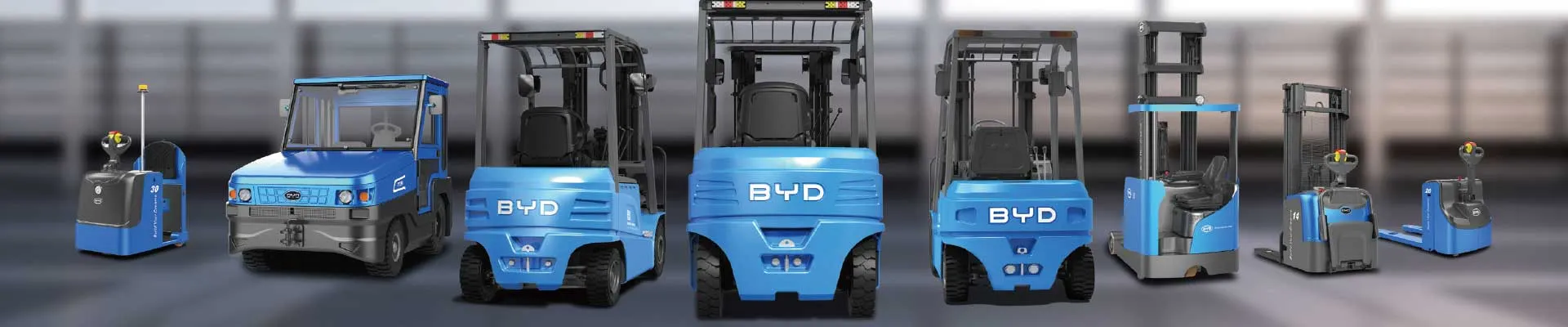
.jpg "Electric forklift fire-response steps for facility safety teams(figure1)")
As electric forklifts are widely adopted in modern warehouses, manufacturing plants and logistics facilities, related fire incidents caused by battery thermal runaway or circuit faults are rare but require standardized, systematic handling to avoid unnecessary personnel injury and property loss. For dedicated facility safety teams, following clear, pre-trained response steps is the core to control hazards at the first time.
The first step of on-site response is to trigger the pre-set emergency alarm immediately once abnormal smolder, visible flame or acrid burning odor is detected from a running or parked electric forklift. The safety team shall first guide all nearby operating staff to evacuate to the pre-designated safe assembly point outside the hazard zone, instead of approaching the faulty forklift without proper personal protective equipment. No unrelated personnel shall be allowed to enter the 10-meter isolation perimeter set around the faulty equipment in this process.
The second step is to cut off the plant’s non-essential power supply related to the forklift charging zone if the fire occurs at the charging station, and manually disconnect the integrated power cut-off switch on the forklift itself from a safe distance, to prevent further expansion of circuit short circuits. Safety team members shall never spray common tap water directly on the burning lithium battery pack of the electric forklift, to avoid unpredictable thermal runaway aggravation.
The third step is to use the Class D or specially certified lithium-ion fire extinguishing agent to suppress open flames, while arranging dedicated staff to contact the local professional fire rescue team immediately, providing accurate information including the type of burning equipment, estimated fire size, and remaining battery capacity of the faulty forklift. Do not attempt to move the burning forklift to other positions, in case of accidental battery pack extrusion that causes secondary hazards.
After the fire is completely put out, the safety team shall keep the whole scene intact, record all details of the incident including pre-fire operation status, handling process, and related parameter data, to carry out subsequent hidden danger investigation and update the facility’s regular electric vehicle fire drill plan, to further optimize the overall workplace safety management system.


