
 简体中文
简体中文 Русский
 Français
 Português
 Español
 لالعربية
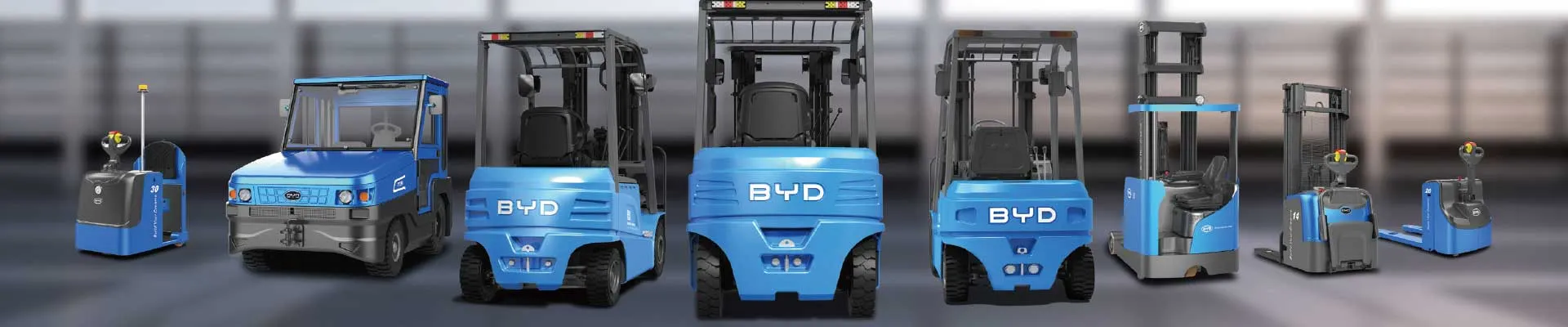
.jpg "The Role of Forklift Mast Geometry in Safe Reversing(figure1)")
In recent years, electric forklifts have been widely adopted in various material handling scenarios, from standard indoor warehouses to light outdoor distribution yards, due to their low noise, zero direct emission and relatively low operating cost features. For frontline operators and warehouse managers, mastering correct use and maintenance rules can help give full play to the advantages of such equipment, and avoid unnecessary wear and hidden safety risks in daily use.
Core Standard Operation Specifications
Before starting any operation, operators need to conduct a quick pre-check on the whole equipment, including remaining battery level, braking system sensitivity, lifting hydraulic component status, and surrounding operation space barriers. During the moving and lifting process, operators should avoid overloading the rated load limit, forbid carrying irrelevant personnel on the vehicle, slow down when turning at narrow aisles, and honk gently if the front view is blocked by stacked goods. It is also recommended to keep the load in a low position when moving, to prevent the goods from falling accidentally and causing safety hazards. Operators should also get familiar with the operation panel layout in advance, to avoid misoperation of function switches in emergency situations.
Routine Scientific Maintenance Guidelines
Regular standardized maintenance helps extend the overall service life of electric forklifts and reduce unexpected downtime in peak operation periods. After finishing daily operation, operators can wipe off accumulated dust and residual sundries on the vehicle surface and ventilation heat dissipation parts, check the connection tightness of battery interface and the electrolyte level of batteries, and check for abnormal oil leakage points on the hydraulic system at the same time. For units that will be parked for more than 7 consecutive days, it is suggested to charge the battery to more than 70% level in advance, disconnect the main power switch, and park the vehicle in a dry, cool and ventilated space, avoiding long term exposure to high temperature or humid environment.
Scenario-based Efficiency Optimization Tips
In daily warehouse material handling scenarios, teams can adjust the driving path planning according to the distribution of shelves and temporary cargo stacking areas, to reduce unnecessary repeated long-distance driving. It is also a practical arrangement to arrange the centralized charging process of electric forklifts in non-peak operation hours, to avoid affecting normal material dispatching during the order fulfillment peak. Avoid long time idling of the vehicle when there is no handling task, which can effectively reduce unnecessary power consumption, and further reduce the overall operation cost of the whole warehouse. Such operation habits can also create a cleaner and quieter working environment for on-site staff, which conforms to the development trend of modern low-carbon logistics.


