
 简体中文
简体中文 Русский
 Français
 Português
 Español
 لالعربية
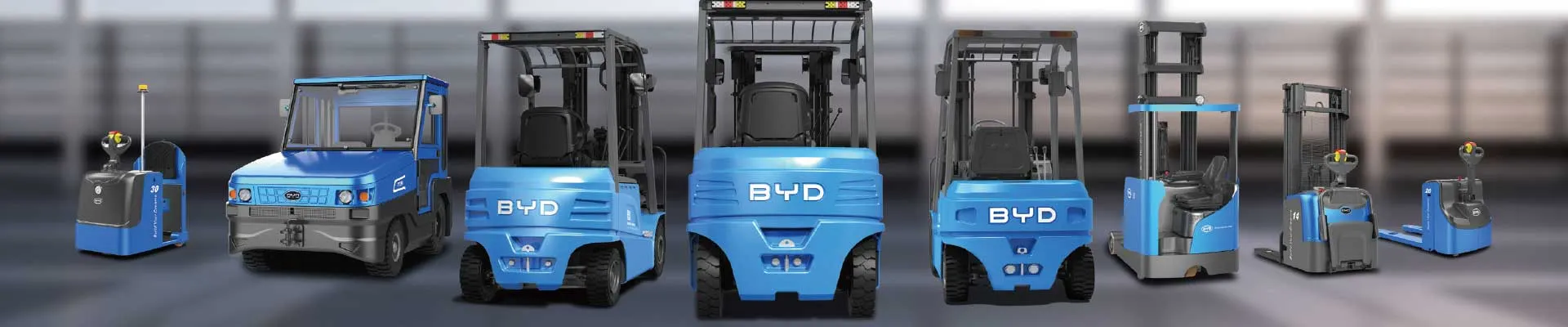
.jpg "Overhead Guard vs Visibility: Balancing Safety and Sight Lines in Forklifts(figure1)")
As low-carbon logistics becomes a core development trend of modern industrial storage, electric forklifts have gradually become a mainstream choice for most material handling scenarios due to their low noise, zero local emissions and relatively low operating cost features. For frontline operators, warehouse managers and equipment maintenance personnel, systematic mastery of relevant professional knowledge can effectively improve operation efficiency, extend equipment service life and reduce unnecessary safety risks.
Core Operation Specifications for Daily Use
Before starting each shift, operators need to complete necessary pre-inspection steps, including checking remaining battery power, confirming the flexibility of the lifting and steering system, testing the normal function of the braking and warning device, and checking the integrity of the load forks and surrounding safety protection structures. During the operation process, operators should strictly follow the rated load limit requirements, avoid overloading for a long time, keep a safe distance from surrounding personnel and obstacles, and do not carry out sharp steering or emergency braking operations on wet and slippery road surfaces to prevent side slip and cargo tipping. When the equipment is running, the view of the operator should be kept unobstructed, and relevant auxiliary prompt measures can be added when transporting extra-large cargo that blocks the front view.
Routine Maintenance and Care Tips
Different from internal combustion forklifts, electric forklifts focus more on the maintenance of power systems and electronic control components. For the battery pack, relevant personnel should follow the standard charging process, avoid deep discharge as much as possible, and do not expose the fully charged battery pack to high temperature environment for a long time. The surface of the electronic control box and motor assembly should be kept clean regularly to avoid the accumulation of dust and debris affecting heat dissipation efficiency, and the wear degree of transmission and walking components should be checked at regular intervals, and lubrication treatment should be carried out according to the operation manual requirements. Timely recording of daily operation data of the equipment can help maintenance personnel quickly locate abnormal problems and reduce the downtime of the equipment.
Scenario Adaptation and Efficiency Improvement Suggestions
Electric forklifts are suitable for most closed warehouse, supermarket logistics, pharmaceutical and food processing scenarios that have high requirements for environmental cleanliness. Reasonable matching of the lifting height, load capacity and body size of the equipment with the actual operation passage width and cargo stacking height can give full play to the equipment's performance advantages. Enterprises can arrange corresponding operation training for different post personnel according to their actual use scenarios, to further standardize operation behaviors and reduce the potential hidden dangers caused by irregular operation.


