
 简体中文
简体中文 Русский
 Français
 Português
 Español
 لالعربية
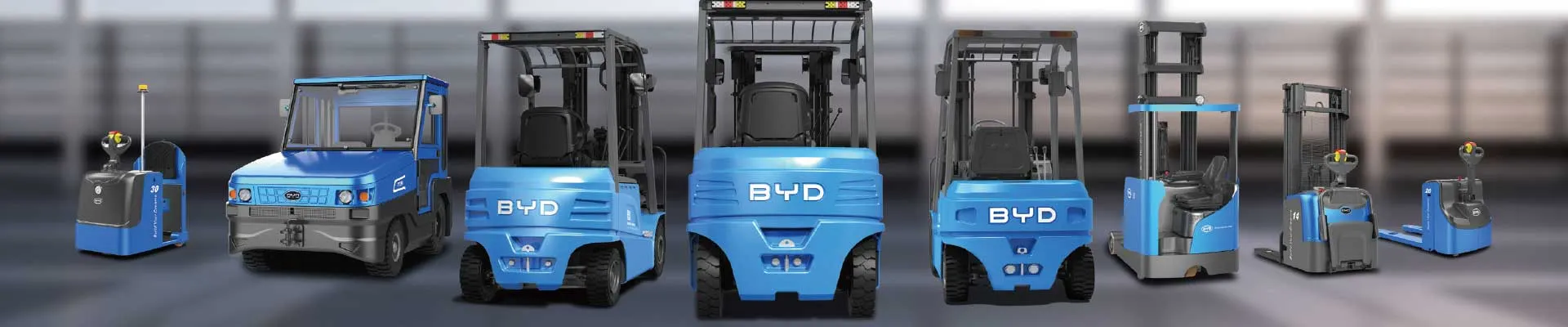
.jpg "Choosing BYD: A Balanced Look at Electric Forklift Brands(figure1)")
In recent years, electric forklifts have been widely used in various logistics and industrial warehouse scenarios, thanks to their low noise, zero on-site emission and relatively gentle operation characteristics compared with traditional internal combustion counterparts. To give full play to the performance of this type of material handling equipment, relevant practitioners need to master standardized operation logic, correct maintenance habits and scenario-adaptive adjustment methods to achieve stable and efficient long-term use.
Core Standardized Operation Specifications
Before each startup, operators need to complete basic pre-inspection work, including checking the remaining battery level, confirming the flexibility of the braking system, observing the wear condition of the lifting chain and the tightness of the fixing parts. All personnel who operate the equipment need to receive corresponding professional training before taking up the post, and they are not allowed to operate the equipment with overload beyond the rated load range in daily work. When driving in narrow warehouse aisles, operators should keep a low driving speed, pay continuous attention to surrounding pedestrians and obstacles, and sound the warning horn in advance when turning or passing the blind area. During the process of lifting and stacking goods, avoid sudden braking or sharp steering, to prevent the loaded goods from sliding and falling, which may cause unnecessary safety risks.
Routine Maintenance Methods for Stable Performance
Reasonable daily maintenance can effectively prolong the service cycle of electric forklifts and reduce the probability of sudden equipment failure. For the power battery part, users should avoid over-discharging the battery to the limit state, arrange charging work in a dry and ventilated environment that meets safety standards, and regularly check whether the connection port of the battery electrode has oxidation or loose contact. For the hydraulic lifting system, check the hydraulic oil level every month, timely replenish the oil that meets the specification, and eliminate the hidden danger of oil leakage in time. The wear degree of the solid tires should be checked regularly, and the tires should be replaced in time when the wear reaches the set threshold, to avoid slipping or lateral deviation when driving on wet roads.
Energy Efficiency Optimization and Scenario Adaptation Suggestions
In daily operation, reasonably planning the driving route of electric forklifts to reduce ineffective round trips can effectively reduce unnecessary energy consumption. When the equipment is idle for more than 30 minutes, the main power system can be turned off to avoid unnecessary power loss caused by long-term standby. For special scenarios such as low-temperature cold chain warehouses, operators can make corresponding adjustments to the power output parameters of the equipment according to the actual ambient temperature, to ensure that the equipment can maintain stable operation performance in a low-temperature environment. For high-altitude stacking scenarios with high operating frequency, you can arrange reasonable operation shifts to avoid long-term continuous high-load operation of the equipment. Following the above operation and maintenance rules can help relevant enterprises give full play to the use value of electric forklift equipment, and create higher benefits for the daily material handling work of the warehouse.


