
 简体中文
简体中文 Русский
 Français
 Português
 Español
 لالعربية
.jpg "Lithium Ride-On Pallet Trucks: Power for Long Hauls(figure1)")
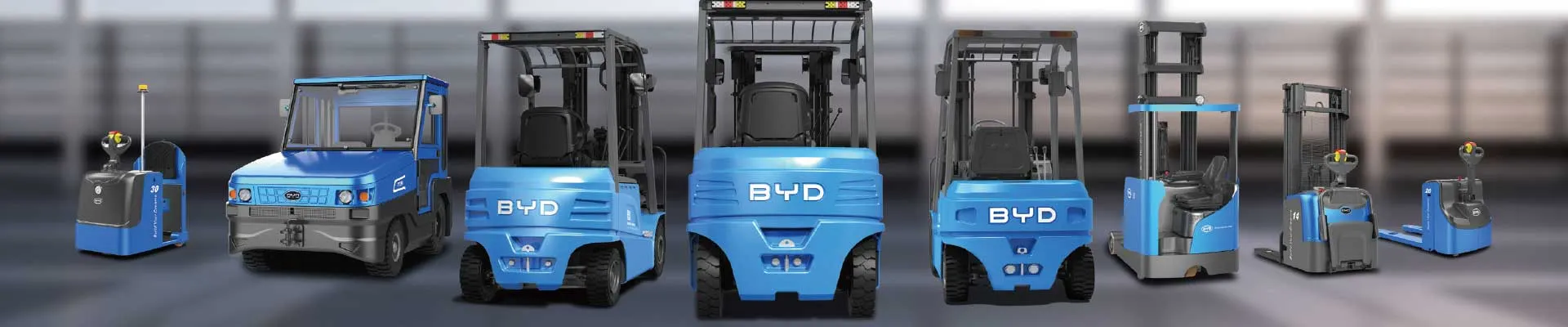
Against the background of the rapid development of modern warehousing and green logistics, electric forklifts have gradually become one of the most widely used material handling equipment in indoor operation scenarios. For frontline operators, warehouse managers and related practitioners, mastering systematic professional knowledge of electric forklifts can effectively improve operation safety, reduce unnecessary loss of parts, and create more stable value for daily logistics links.
Core Performance Features of Electric Forklifts
Compared with traditional internal combustion handling equipment, electric forklifts produce no local exhaust emissions during operation, and the overall noise level is significantly lower, which can meet the environmental and health requirements of long-term closed indoor operations such as food storage, pharmaceutical warehouses and precision electronic parts storage areas. Its power system converts electrical energy into kinetic energy with relatively low energy loss, and the overall vibration amplitude of the fuselage during operation is small, which can bring more stable operation experience for operators, and will not cause extra discomfort for workers who drive the equipment for several consecutive hours.
Standardized Operation Guidelines for Daily Use
During daily operation, operators should avoid frequent sudden acceleration and sudden deceleration without actual demand, and do not carry loads exceeding the rated load capacity of the equipment for a long time. When driving on ramps, keep the load side facing the uphill direction to maintain the overall center of gravity stability of the fuselage. If the equipment needs to be parked for more than 48 hours, the power switch should be cut off in time to avoid unnecessary power consumption and potential safety hazards caused by long-term idle state. Operators should also check the surrounding environment for passing personnel and obstacles before each start-up, to reduce the probability of collision accidents.
Routine Maintenance Points to Guarantee Stable Performance
Regular maintenance work can effectively extend the service cycle of electric forklifts. In daily inspection, operators should regularly check the connection status of the power interface to avoid performance attenuation caused by loose or corroded connectors, regularly confirm the liquid level of the hydraulic system, the sensitivity of the brake device, and the wear degree of the walking tires. Do not modify the original circuit layout of the equipment without professional guidance, so as to avoid abnormal failure of the power system. Record the basic operation status of the equipment every week, which can help maintenance personnel quickly locate problems when hidden dangers occur.
Scenario Matching Principles for Different Use Needs
When selecting electric forklifts for different operation scenarios, you can refer to the actual operation parameters of the site to match the appropriate configuration. For narrow channel warehousing scenarios, you can choose a compact fuselage design to improve the utilization rate of storage space. For low-temperature cold storage operation scenarios, you can choose models with power systems adapted to low-temperature environments to ensure stable power output. Following the above principles can help enterprises give full play to the use value of electric forklifts and improve the overall operation efficiency of material handling links.


