
 简体中文
简体中文 Русский
 Français
 Português
 Español
 لالعربية
.jpg "Lithium Forklift Batteries Explained: Capacity, Voltage and Runtime(figure1)")
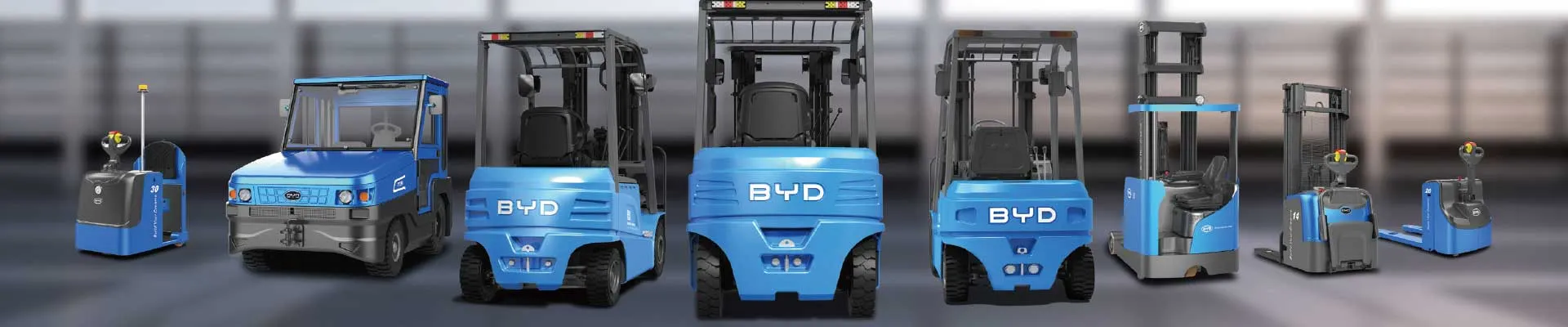
Against the background of growing demand for low-carbon and efficient intralogistics operations across all industrial sectors, electric forklifts have become one of the most widely adopted material handling equipment in closed warehouses, manufacturing workshops and distribution centers. Mastering correct use and management rules of such equipment can bring stable performance output for long-term daily operations.
Core Daily Operation Safety Specifications
Before every shift, operators need to complete a full pre-check of the equipment, including remaining battery level, brake response sensitivity, steering system flexibility and the integrity of load forks. During operation, operators should avoid sudden acceleration or sharp turns in pedestrian intensive areas, strictly follow the rated load parameter to prevent tilting risk, and never park the equipment on uneven slopes without pulling the hand brake tightly. Operators are also advised to keep full concentration during the whole operation process to avoid unexpected collisions with surrounding storage racks or staff.
Routine Maintenance Guidelines for Stable Performance
Proper regular maintenance can effectively extend the service life of core components of electric forklifts. For the power battery part, operators should avoid deep over-discharge or long-time overcharging, and wipe the electrode surface to remove accumulated dust on a regular basis to keep good conductivity. It is also necessary to regularly check the sealing performance of the hydraulic lifting system, the wear degree of solid tires, and the dustproof and waterproof status of the electronic control module, to prevent tiny impurities from entering the inner structure and causing unnecessary malfunctions.
Efficiency Optimization Methods for Daily Operations
Enterprises can make small adjustments in workflow to maximize the working efficiency of electric forklifts. For instance, they can pre-plan reasonable operation routes according to the storage location distribution of different goods, reduce the repeated walking distance of equipment during each shift, and arrange targeted skill training for operators to cut invalid operation actions. It is also practical to match the specification of forks with the most common pallet size in the warehouse, to shorten the time spent on loading and unloading each batch of goods. These small adjustments will not bring extra investment cost, but can bring noticeable performance improvement in long-term daily operation.


