简体中文
 Русский
 Français
 Português
 Español
 لالعربية

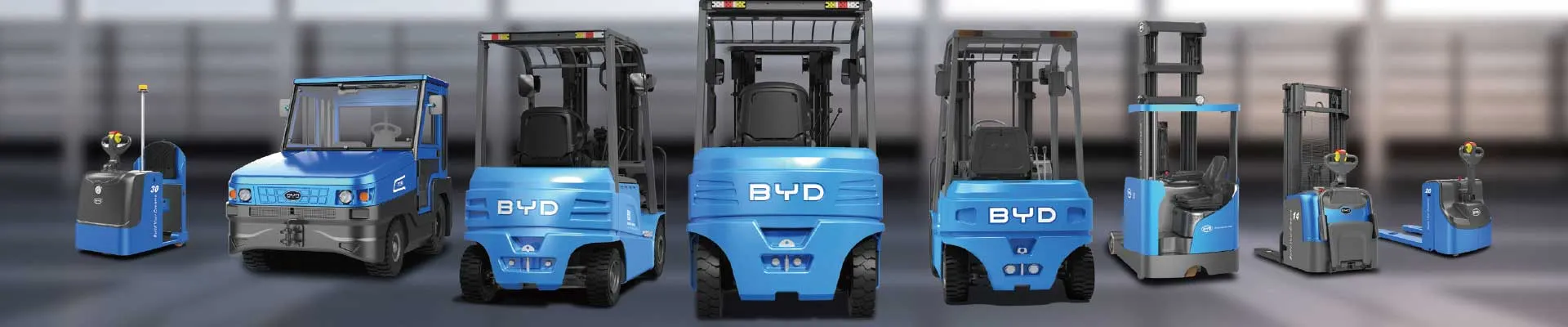
Lomé, as the core port and logistics hub of Togo, has dense intra-site handling demands across port terminals, urban distribution centers, small and medium-sized warehouses and light manufacturing parks. Three-wheel forklifts are widely favored by local operators for their excellent steering flexibility, narrow passage adaptability and small turning radius, which can effectively improve the utilization rate of limited storage space. Many local decision-makers used to only compare the initial procurement cost of handling equipment, while ignoring the long-term cumulative expenditure during the full use cycle, making the 5-year total cost of ownership (TCO) analysis a very practical decision-making reference for local operation teams.
The first component of 5-year TCO covers the initial investment, including the procurement cost of the equipment itself and the supporting charging facility deployment cost. For most operation scenarios in Lomé, the basic charging facilities suitable for three-wheel electric forklifts do not need complicated site transformation, and can be directly connected to the existing commercial and industrial power supply system, avoiding extra hidden costs in the initial preparation stage.
The largest gap of 5-year TCO between electric three-wheel forklifts and traditional internal combustion models comes from the daily operation and energy consumption expenditure. The local industrial and commercial electricity price in Lomé has maintained a stable and reasonable level for a long time, and the energy consumption cost per working hour of electric three-wheel forklifts is far lower than the fuel cost of the same load internal combustion forklift. After 5 years of high-frequency operation, the accumulated energy cost gap will be very considerable, and operators do not need to face the extra uncontrollable expenditure brought by frequent fuel price fluctuations.
The maintenance cost in the 5-year operation cycle is another non-negligible part. The number of moving parts of electric three-wheel forklifts is far less than that of internal combustion products, there is no need for regular replacement of engine oil, filter elements and exhaust related components, and the total conventional maintenance expenditure within 5 years is much lower than that of internal combustion forklifts of the same load. In addition, under the local low-carbon operation guidance policy in Lomé, zero-emission electric forklifts will not face additional fines for non-compliant exhaust emissions, and operators can also apply for corresponding green equipment purchase subsidies to further reduce the comprehensive holding cost.
At the end of the 5-year use cycle, the residual value of well-maintained three-wheel electric forklifts is at a higher level than that of internal combustion forklifts of the same age, which can further dilute the average annual holding cost. We are Jianshu New Energy, focusing on BYD electric forklifts. If you have any relevant demands for equipment matching and personalized TCO calculation, please send an email to [email protected] for consultation.