
 简体中文
简体中文 Русский
 Français
 Português
 Español
 لالعربية
.jpg "Stacking Pallets Safely: Load Rules for Pallet Stackers(figure1)")
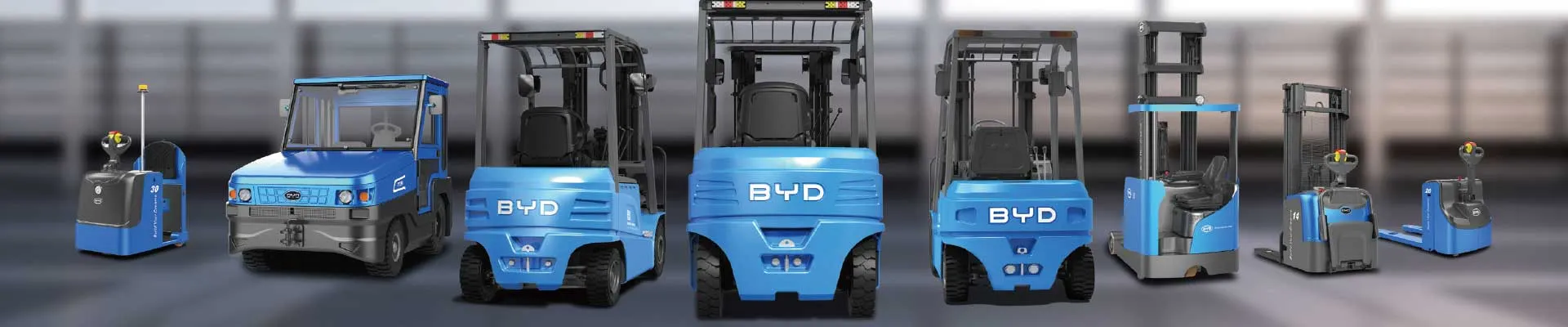
As low-carbon logistics development accelerates across global supply chains, electric forklifts have gained wide popularity in indoor and closed working scenarios for their low noise and zero local emission features. Many warehouse and logistics practitioners still lack systematic understanding of proper use and management of such equipment, which easily leads to extra operation cost and hidden safety risks.
Core Performance Characteristics of Modern Electric Forklifts
Different from internal combustion counterparts, electric forklifts rely on on-board power battery packs to provide power for driving and cargo handling modules. Their operation process does not produce exhaust gas, which fits the air quality management requirements of enclosed storage spaces, food processing workshops, pharmaceutical warehouses and other special scenarios. The noise level during normal operation stays at a relatively low range, which will not cause excessive noise disturbance to surrounding staff working continuously for long shifts. Most models have compact body dimensions, which can adapt to narrow aisle operation spaces, helping improve the per unit area utilization rate of warehouse storage space.
Standard Daily Operation Guidelines
Before starting each shift, operators need to conduct a simple pre-shift inspection, covering power residual status, brake system response, lifting mechanism flexibility and tire wear degree. Operators need to hold corresponding operation qualification certificates, and avoid overloading the equipment beyond the rated load range during cargo handling process. When the equipment is running in narrow passages, operators need to keep a proper safe distance from surrounding shelves and passing personnel, and avoid sharp turning at high speed. After finishing daily work shifts, operators need to park the equipment at the designated parking area, lower the lifting fork to a horizontal position close to the ground, and cut off the main power supply to avoid unnecessary power consumption.
Routine Maintenance and Care Suggestions
Regular maintenance work can effectively reduce unexpected failure rate of electric forklifts, and extend the overall service cycle of key components. For the power battery pack, users need to follow the official charging specification requirements, avoid over-discharging the battery to extremely low power level for a long time, and keep the surface of battery pack clean and dry during daily use. The movable connection parts of the lifting mechanism can be coated with a small amount of professional lubricant periodically to reduce abrasion loss caused by frequent friction. Operators are suggested to record daily operation data and maintenance records, and arrange professional technical personnel to conduct comprehensive inspection for the equipment on a regular basis. Proper operation and reasonable management of electric forklifts can bring stable operation benefits for small and medium-sized logistics and warehouse scenarios, helping teams build a low-cost, high-efficiency material handling system.


