
 简体中文
简体中文 Русский
 Français
 Português
 Español
 لالعربية
.jpg "Pallet Truck Lithium Retrofit: Upgrading a Trusted Workhorse(figure1)")
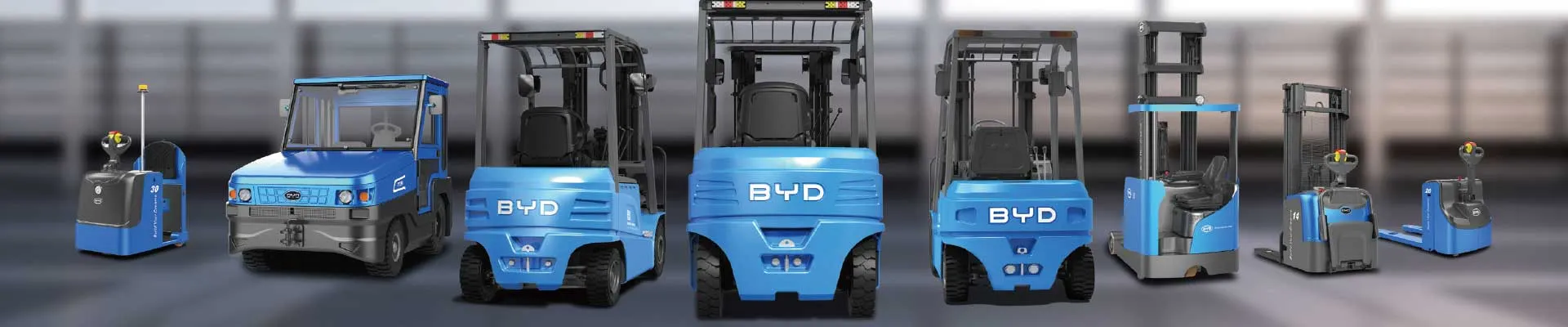
As the low-carbon logistics trend continues to spread across the industrial and warehousing sectors, electric forklifts have become one of the most widely adopted material handling equipment for their low noise, zero local emissions and relatively low long-term operating costs. Many new operators and facility managers still lack systematic, practical guidance to tap the full performance of such equipment without causing extra wear or safety hazards.
Core Pre-operation Check Points for Electric Forklifts
Before starting any shift operation, operators need to complete a series of standardized checks to eliminate hidden risks in advance. The first step is to test the braking system, steering sensitivity and all warning indicator lights to confirm no abnormal response. Next, operators need to verify the remaining battery level to avoid sudden power loss during high-intensity handling tasks, and check the fork arms, load backrest and hydraulic lifting structure for obvious deformation or abrasion that may affect load stability. It is also necessary to confirm that the surrounding operating area is free of sundries, unrelated personnel and obstacles that may cause collision during moving or turning.
Routine Maintenance Practices to Prolong Equipment Service Life
Scientific daily maintenance does not require overly complicated professional operations, and can effectively reduce unexpected failure rates. For the core power battery component, operators should follow the specified charging rules, avoid full discharge for a long time, and do not carry out overcharging that exceeds the rated charging duration. It is recommended to wipe the dust and debris on the surface of the battery and heat dissipation components of the motor regularly, to prevent poor heat dissipation from causing performance attenuation. The hydraulic oil level and sealing condition of the lifting system should be checked every fixed cycle, and the aging sealing elements should be replaced in time if slight oil leakage is found. Operators should also avoid long-term overloading beyond the rated load, which will cause irreversible wear of the load-bearing structure and power system.
Scenario Matching Strategies to Boost Operating Efficiency
Different operating scenarios have different requirements for electric forklift configuration, and proper matching can maximize the input-output ratio. For narrow-aisle high-level storage scenarios, electric forklifts with small turning radius and high lifting height can be selected to give full play to the vertical storage space advantage. For low-temperature cold chain storage scenarios, it is recommended to adopt battery configurations with low temperature resistance to avoid sudden drop of battery output efficiency in long-term low temperature environment. For outdoor open-air operation scenarios, models with sufficient waterproof and dustproof rating can cope with more complex environmental conditions. Operators can also adjust the corresponding operation parameters according to the actual load weight and working duration to reduce unnecessary energy consumption.


