
 简体中文
简体中文 Русский
 Français
 Português
 Español
 لالعربية
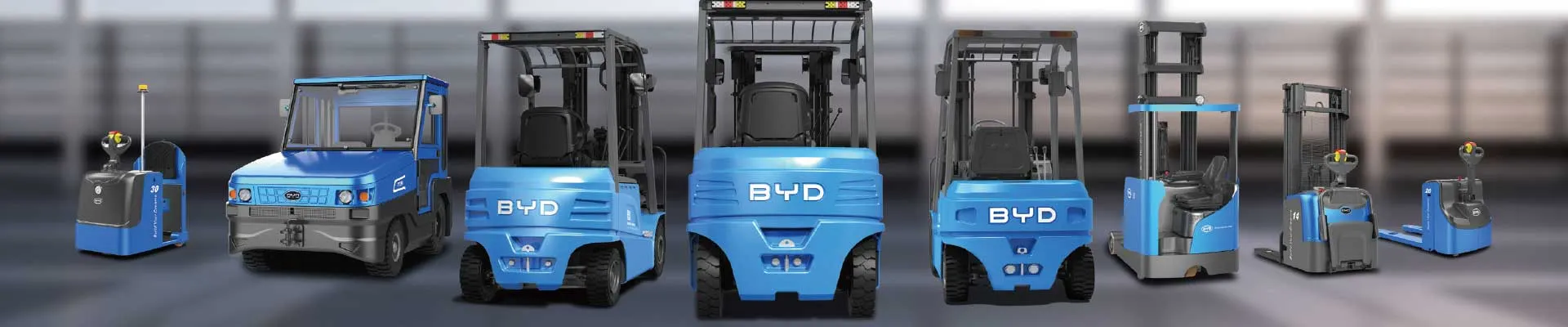
Against the general trend of low-carbon transformation of modern logistics, electric forklifts have become one of the most widely applied material handling equipment in warehouses, manufacturing workshops and distribution centers. Mastering proper skills of using, maintaining and matching scenarios can help relevant personnel give full play to the equipment performance and reduce unnecessary operating costs in daily work.
Core Operational Specifications for Daily Use
Before each startup, operators need to check the remaining power level, the flexibility of the steering system, the sensitivity of the braking device, and whether the fork accessories have obvious deformation or structural damage. During the operation process, operators should keep the driving speed within the safe range corresponding to the working scenario, avoid sudden acceleration or sudden braking when carrying heavy loads, and keep sufficient safety distance from surrounding personnel, stacked goods and passage facilities. When the equipment sends out a low-power warning, it should be parked at the designated charging position in time for standardized charging operation, and it is not recommended to force the equipment to continue working under insufficient power status, so as not to cause unnecessary damage to the power system.
Routine Maintenance to Extend Service Life
Daily maintenance work can be divided into post-work daily inspection, weekly partial check and monthly regular professional maintenance. After daily operation, operators need to wipe the dust and residual sundries on the equipment surface, clean the impurities stuck in the gaps of walking wheels, and check the heating status of the motor and battery shell. For the core battery pack component, it is necessary to check the connection tightness of wiring terminals regularly, avoid long-term full-power storage or long-term power loss storage, and keep the working and storage environment dry and ventilated. Regular professional maintenance can check the wear degree of internal transmission parts, replace the deteriorated lubricating oil after long-term use, and eliminate hidden faults that are not easy to find in daily inspection in time.
Optimizing Application Scenarios to Boost Work Efficiency
Enterprises can reasonably match the parameters of electric forklifts according to the actual maximum weight of goods, the height of storage shelves, the width of operation passages and other conditions of the working scenario, to avoid performance mismatch that leads to capacity waste. For scenarios requiring long hours of continuous operation, a reasonable shift scheduling plan can be formulated, with supporting spare battery configuration to reduce waiting time caused by charging. During the operation process, the access sequence of goods can be planned in advance, so as to reduce unnecessary turning and lifting times of the equipment, and further improve the overall efficiency of material handling. With standardized use and management, electric forklifts can deliver stable performance for long-term industrial logistics scenarios.


