
 简体中文
简体中文 Русский
 Français
 Português
 Español
 لالعربية
.jpg "Forklift Fleet Audits: Checking Condition and Compliance(figure1)")
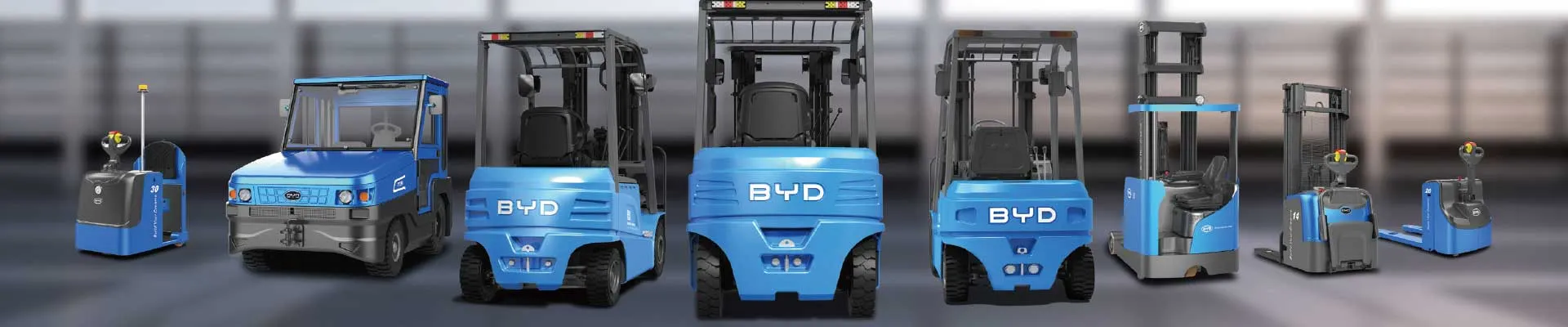
As more logistics and warehousing facilities shift to low-carbon material handling solutions, electric forklifts have become one of the most widely applied equipment in indoor and semi-enclosed operation scenarios. Unlike internal combustion counterparts, electric forklifts rely on power modules to provide traction and lifting force, which requires operators and management teams to master targeted usage and management rules to tap their full application value.
Basic Operation Rules for Daily Safety
Before starting any operation, operators should complete pre-operation checks covering tire condition, brake sensitivity, lifting chain tension, and power remaining status, to rule out hidden risks caused by long-term idle storage. During operation, it is advisable to avoid sudden acceleration or sharp steering, especially when carrying heavy loads close to the rated load limit, to prevent unbalanced load shift that may cause unstable vehicle posture. For indoor operation scenarios, operators should also maintain a proper safety distance with surrounding personnel, storage racks and stacked goods, to reduce the probability of accidental collisions and unnecessary property loss.
Routine Maintenance Guidelines for Long Term Stable Performance
Regular maintenance work can effectively reduce unexpected downtime and extend the overall service cycle of the equipment. After each shift, operators are suggested to clean the dust and debris attached to the body, especially the heat dissipation holes of the power system and the contact parts of the fork teeth, to avoid abnormal wear caused by accumulated foreign matters. It is also necessary to follow the official recommended cycle to check the wear degree of contactors, bearings and control modules, and replace wearing parts in time when they reach the preset wear threshold, rather than waiting for complete failure to take remedial measures that may bring higher repair cost.
Practical Strategies to Improve Energy Utilization Efficiency
Reasonable operation habits can effectively reduce unnecessary power consumption, so as to extend the single shift operation mileage of the equipment. Operators can plan the driving route in advance before each shift, reduce unnecessary repeated turning and long-distance no-load driving, and adjust the lifting speed according to the actual weight of the goods, to avoid excessive power output that does not match the operation demand. For power replenishment work, it is recommended to arrange charging during non-operation peak hours, and follow the standard charging process to avoid overcharging or deep discharge that may damage the internal structure of the power module. By implementing the above targeted management measures, enterprises can give full play to the advantages of electric forklifts in low noise, zero local emission and low operation cost, and continuously improve the overall operation efficiency of the entire material handling link.


