
 简体中文
简体中文 Русский
 Français
 Português
 Español
 لالعربية
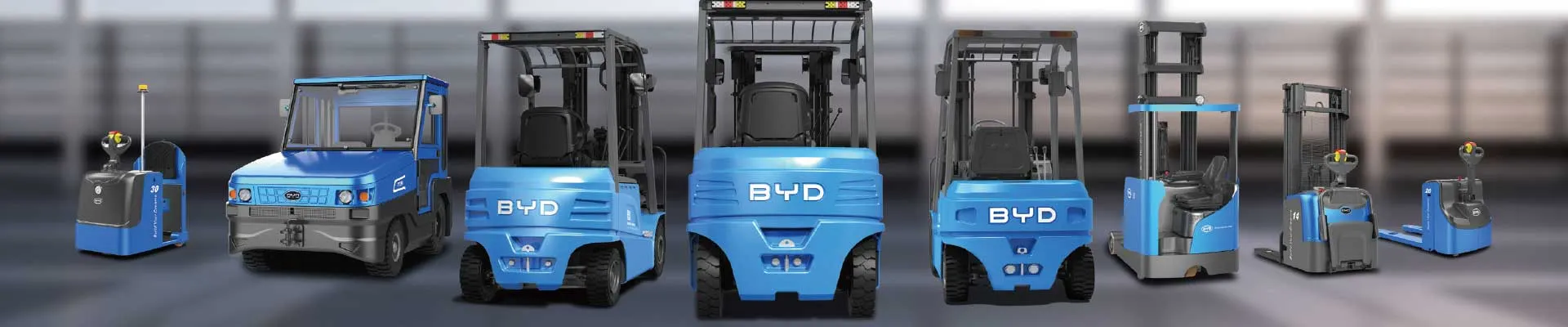
High-bay warehouse scenarios are facing growing demand for maximizing limited storage footprint, and selecting suitable material handling equipment is the core premise to realize reasonable storage density optimization. The BYD reach truck is developed with targeted hardware design features matching such operation requirements, to support steady, efficient operation in narrow and high stacking scenarios without extra modification to existing warehouse infrastructure.
The optimized body width and steering mechanism is the first core hardware characteristic for density improvement. The compact overall structure reduces the minimum required aisle width for safe operation, so that warehouse managers can shrink the gap between adjacent storage racks appropriately, to arrange more cargo racks within the same floor area. The precise steering and positioning control system also cuts down the operation margin reserved by operators for frequent turning, further releasing extra available space for rack layout. Operators can complete all turning and stacking actions within the preset narrow aisle range, no extra reserved buffer space is needed for daily regular operation.
The high-lift stable mast structure is another key hardware design supporting storage density optimization. The reinforced mast structure keeps small lateral shaking amplitude even at maximum lifting height, which allows the distance between the top of cargo and the warehouse ceiling to be set within a reasonable smaller range. This feature makes full use of the vertical space of the high-bay warehouse, to add extra layers of storage racks without increasing the total site area, directly lifting the total storage capacity of the whole warehouse. The mast also supports stable sight line of operators during high position operation, to reduce misoperation risk when accessing goods on high layers of racks.
The matched power system and energy supply hardware also provides reliable support for long-hour continuous operation in density optimized high-bay warehouses. The stable power output keeps consistent lifting and moving performance even in frequent access to cargo across different rack positions, which avoids operation pause caused by power attenuation during peak working hours. The integrated design of the power component also saves extra body occupation space that might be taken by traditional power structures, leaving more space for operation movement inside narrow aisles.
All the above hardware characteristics are developed according to actual operation data of high-bay warehouse scenarios, and can be adapted to most standard high-bay storage density optimization projects. When cooperating with overall warehouse planning, this type of reach truck can help enterprises obtain balanced improvement in both storage capacity and operation efficiency, creating stable practical value for daily intralogistics management.


